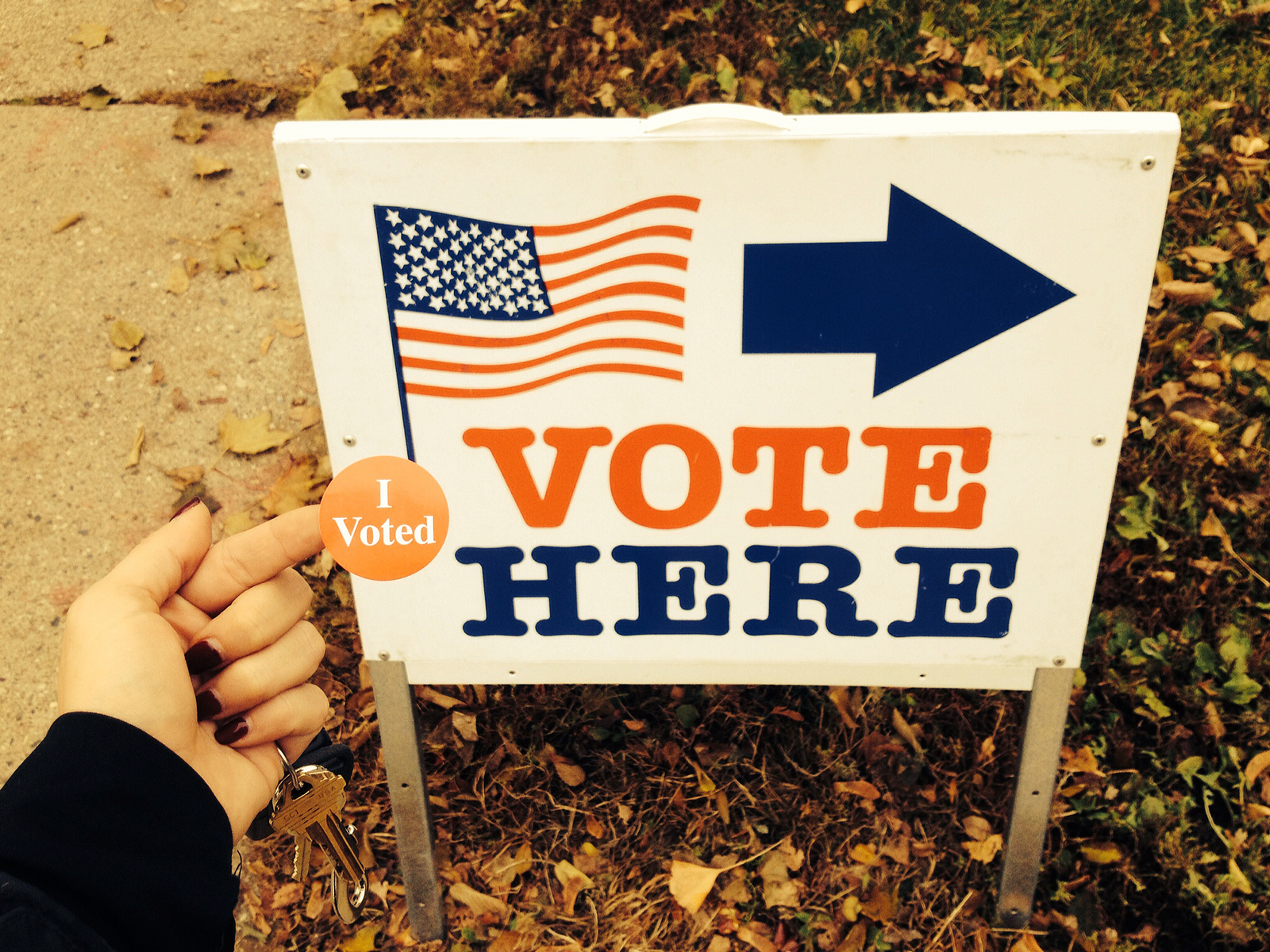
Polling place sign.
An additional 60,000 Californians may now cast ballots in the next election. That’s because last week Secretary of State Alex Padilla reversed a policy that denied voting rights to former prisoners who served their time but were released under community supervision.
The change in California policy could have far reaching ramifications nationwide and for African Americans in particular, as the percentage of Blacks who can’t vote because they have a criminal record has reached double digits in several states, including Virginia, Florida and Kentucky, ThinkProgress reports. As a result, Congress members are pushing for a national law to restore voting rights to ex-prisoners, a move that could result in 4 million more Americans hitting the polls.
California has the nation’s largest prison industrial complex, with prisons so crowded the United States Supreme Court ordered the state to cut its prison population by 30,000 in 2009. The state has used early release programs to reduce the number of prisoners, and restoring voting rights to such prisoners may lower California’s recidivism rate, according to Padilla.
“There is strong evidence that reintegrating former inmates back into society by helping them find jobs and housing gives them a better chance of not re-offending, and I think voting is a key part of that,” Padilla told ThinkProgress. “It’s giving people a voice in their communities. For me, it’s equal parts the right thing to do from a voting rights and a public safety perspective.”
Padilla settled with voting rights activists who sued California for $215,000 because of the law that disenfranchised newly released prisoners. As it is, most Californians, even those eligible to vote, typically stay at home on Election Day. ThinkProgress reports that the state had only about a 42 percent voter turnout rate during the November 2014 election. The turnout rate in Los Angeles County is even worse, with just 31 percent of registered voters showing up on Election Day.
What’s more, most voters statewide tend to be high-income, old and white and not an accurate representation of the residents who make up the Golden State, where the population is majority minority. Although Latinos comprise the state’s largest ethnic group at 38.4 percent, they have the lowest voting rate of any group with a turnout frequency of 28 percent. Hispanic men make up 42 percent of the state’s prison population.
Blacks, on the other hand, comprise just 6.6 percent of California’s population, but 32 percent of voters in the state’s last election. African American men, however, make up a whopping 29 percent of the state’s prison population.
“We know we have a lot of work to do on the strength of our democracy,” Padilla told ThinkProgress. “We need to focus on the whole pipeline: both getting more currently registered people to cast ballots, and getting more eligible Californians on the voter rolls.”
He said that he’s concerned about other states, including Wisconsin, North Carolina and Florida, that have restricted voting rights. He said he wants his state to serve as a counterexample. Maryland is the state most likely to follow the California model. A bill there seeks to restore voting rights to ex-prisoners on parole or probation. More than 40,000 Maryland residents would be able to vote if the governor signs the bill. Nationwide, just 13 states and Washington, D.C., allow prisoners to vote immediately after they’ve completed their sentences.
Given that 1 in 12 Black men and 1 in 200 Black women between the ages of 25 and 54 are behind bars, compared to 1 in 60 non-Black men and in 1 in 500 non-Black women, there’s no denying the role that race plays in laws that disenfranchise former convicts. Denying ex-prisoners the right to vote not only prevents them from fully exercising their civic duties but also denies a disproportionate amount of African Americans the ability to have their voices heard. Those who criticized the disaffected Blacks in Baltimore, New York and Ferguson, Mo., for taking to the streets to be heard should wholeheartedly support laws that would restore voting rights to former prisoners.
Anyone who wants Blacks to engage in lawful protest should support measures that would result in more Blacks being able to voice their concerns at the ballot box. If you live in a place where ex-prisoners are disenfranchised, contact your state legislators and demand that they take action to restore voting rights to all.