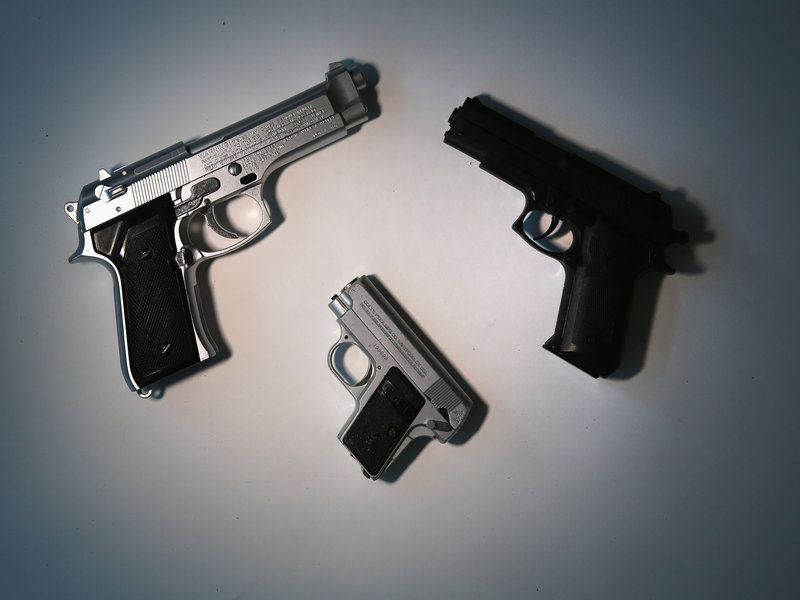
It is illegal to sell toy guns in New York that look real. (John Moore/Getty Images)
New York Attorney General Eric T. Schneiderman has ordered several retailers to stop selling realistic-looking toy guns, according to NPR. Schneiderman sent a cease and desist order to retailers such as Walmart, K-Mart, Amazon and Sears instructing them to stop selling toy guns that could be mistaken for real firearms.
“When toy guns are mistaken for real guns, there can be tragic consequences,” said Schneiderman in a press release. “New York State law is clear: retailers cannot put children and law enforcement at risk by selling toy guns that are virtually indistinguishable from the real thing.”
The AG’s investigation found more than 6,000 guns violating state policies were sold in New York over three years. Retailers agreed to pay a $300,000 fine as part of the settlement. The retailers also said they would comply with the terms of the settlement.
According to CNN, a Sears spokesman said that the company is “pleased that we were able to resolve the Attorney General’s concerns regarding toy gun sales in a mutually satisfactory way.” Additionally, CNN reports that an ATCA spokesperson said the company has stopped shipping to New York addresses. One of the sites it operates, MoreToyGuns.com, is now including a red banner warning that all New York state orders will be canceled.
The New York Attorney General’s office was concerned retailers were selling toy guns that came in realistic colors such as black, silver and grey. Toy guns are supposed to be marked with a distinctive orange stripe indicating they are not real weapons. The AG Office’s investigation found some retailers were avoiding state restrictions on selling realistic-looking toy guns by going online.
“It now appears that those sales have moved to the online marketplace. This new investigation reveals that many prohibited toy guns, priced from less than $10 to as much as several hundred dollars, can be easily purchased online and shipped into the state,” according to a press release from the AG’s office.
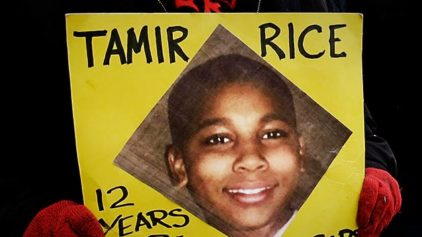
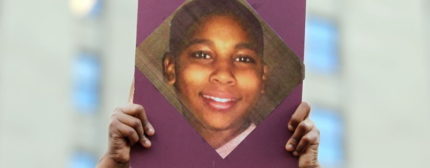
The ban was motivated by the fear of children wielding fake guns being killed by the police. This is what happened to Tamir Rice, a 12-year-old Ohio boy, who was killed by Cleveland police after they received reports he was wielding a gun at a local park. The gun turned out to be a replica. Although Cleveland police claimed they told Rice to drop the weapon, video shows Rice was killed by officer Timothy Loehmann within a few seconds of the arrival of the squad car.
New York has hid similar incidents.
According to Schneiderman, since 1994 there have been 63 shootings linked to toy guns in the state, resulting in at least eight deaths. CNN reported that at a press conference Schneiderman said that it was the 1998 death of Brooklyn teenager Michael Jones, whose water gun was mistaken by police for a real weapon, that spurred lawmakers to ban realistic toy weapons.
New York is not the only state to crack down on toy gun sales.
According to the New York Times, this year, lawmakers in Florida, Indiana, Massachusetts, Nebraska, New York, Ohio and Washington introduced legislation to create or amend toy gun laws. Six states, Puerto Rico and Washington, D.C., already have existing laws banning realistic toys.