KUAJOK, South Sudan — After 48 hours of agonizing labor pains, Nyibol Garang’s family still refused to bring her to the hospital.
So the 23-year-old woman set off by herself — mid-labor — to walk four hours to the only major hospital in the state of Warrap in South Sudan.
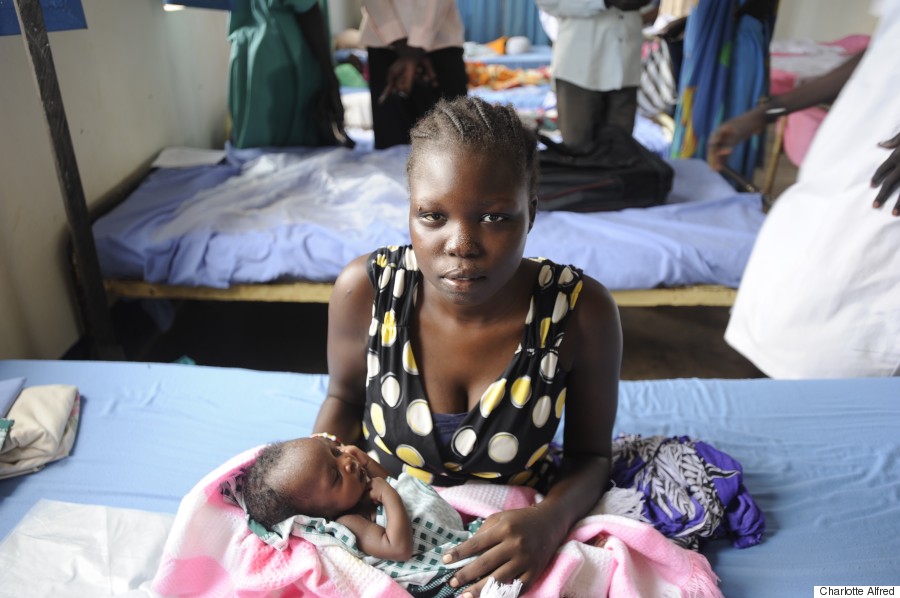
The hospital is a small cluster of one-story buildings in the state capital of Kuajok, crammed with rickety beds and mattresses lining the floors. It treats more than 100 patients a day from all over the state, which has a population of nearly 1 million people.
When Garang arrived at the hospital on a Friday in late May, doctors told her she would need to have a cesarean section or her baby would not survive. Garang said she couldn’t have an operation without her husband’s permission. But when her husband finally joined her at the hospital the next morning, he refused.
In this conservative, rural society, women have little say over their own bodies, and many people are fearful and suspicious of modern medicine. “If you decide to stay at the hospital, whether you live or die, you can never return home,” Garang’s husband told her.
Garang — at this point three days into her labor — acquiesced and began the walk home. A nurse from the hospital came running down the road after her. She appealed to Garang to choose her life, and her child’s life, over her husband’s wishes.
“I agreed, because I don’t want to die,” Garang told The WorldPost, as she recovered in Kuajok’s maternity ward a day after the operation. “And if I have to die, I’d prefer it to be at the hands of the doctors rather than lying at home.”
After Garang agreed to let doctors operate, they discovered why her labor had been so difficult: She was pregnant with twins. She’d had no idea, and neither had the doctors, who couldn’t afford an ultrasound machine. Once Garang’s twin girls were safely delivered, a procession of singing, ululating nurses and well-wishers carried the newborns into the maternity ward.
South Sudan has the highest maternal mortality rate in the world — 2,054 deaths per 100,000 births, according to the last national survey in 2006. No other country comes close: The next two highest-ranked countries, Somalia and Chad, have maternal mortality rates half as high as South Sudan’s. And aid workers at several agencies told The WorldPost that they believe the official numbers actually understate the situation in South Sudan, since many women die in their homes or en route to hospitals, where their deaths go unrecorded.
When South Sudan won independence from Sudan in 2011, four years ago this Thursday, there was great hope around the world that these kinds of devastating figures would become a thing of the past. With the promise of peace and an influx of aid, it seemed this remote and war-torn region would finally have a chance to remedy its chronic lack of infrastructure and services — issues that have contributed to the country’s sky-high rates of malnutrition and illiteracy, among other problems.
Just two years later, those hopes were dashed by violence, as conflict between the new nation’s leaders exploded into a civil war that is still wrenching the country apart along ethnic lines and giving rise to a series of gruesome atrocities.
Giving birth, already a dangerous prospect in the region, is becoming even more risky. According to Medicins Sans Frontieres, some 90 percent of South Sudanese women do not give birth in formal medical facilities. Expectant mothers already had to contend with a widespread aversion to modern medicine, as well as the prospect of a long, difficult journey to one of the few health facilities in the country. Now they also have war to deal with.
Mistrust in the government’s medical system runs deep in South Sudan, a legacy of years under Sudan’s repressive policies. In the past two years, public perception of the medical system has suffered even further, due to dwindling resources and tensions with unpaid and overworked staff, Suzie Francis Paul, a World Health Organization medical officer in South Sudan, told The WorldPost.
Read more at Huffington Post