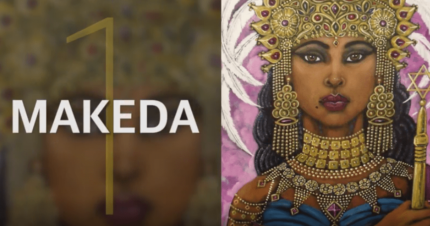
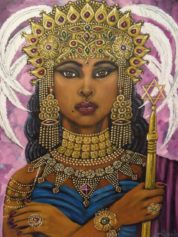
 It was the Queen of Sheba that first drew Louise Schofield — an archaeologist and former curator at the British Museum — to the Gheralta plateau in northern Ethiopia. She’d heard tell of a 20-foot stone stele carved with an inscription and a symbol often linked to the biblical queen: a sun and crescent moon.
“The story of the Queen of Sheba has a central place in the heart of all Ethiopians, so I became interested in the story myself,” she recalls (Sheba is thought to be located in parts of Ethiopia).
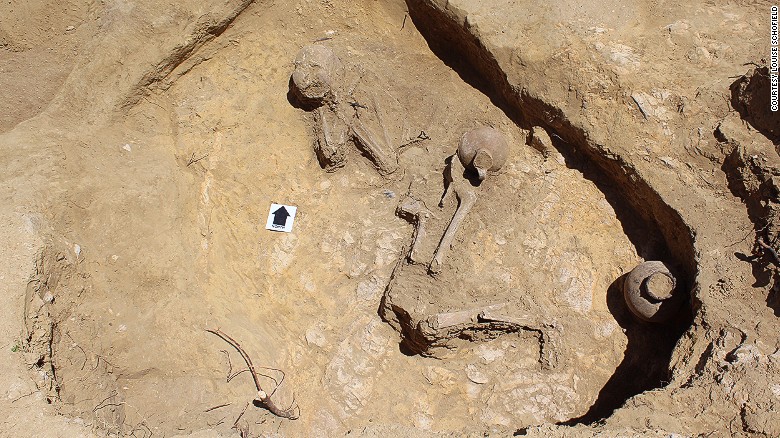
It was this initial visit that ultimately led her to discover the 2,000-year-old remains of a character she fondly refers to as “sleeping beauty.”
The grave was discovered at the stone stele, in an area that was once part of the ancient kingdom of Aksum, which today encompasses Ethiopia and Eritrea. Inside, Schofield’s team found the skeleton of a woman posed in a resting position, with her chin laid gently on one hand. A Roman-era bronze mirror was placed before her face. The corpse was surrounded with glass vessels (to catch the tears of the dead), as well as a bronze cosmetics spoon and a lump of kohl eyeliner.
“She must have been very wealthy, and probably well-loved to be placed in this position, and judging by all the items of finery around her,” surmised Schofield.
The dig also uncovered several other graves, all of which had several bodies buried beneath. In some, she found the remains of large warriors who each wore an iron bangle.
Read the full article: CNN