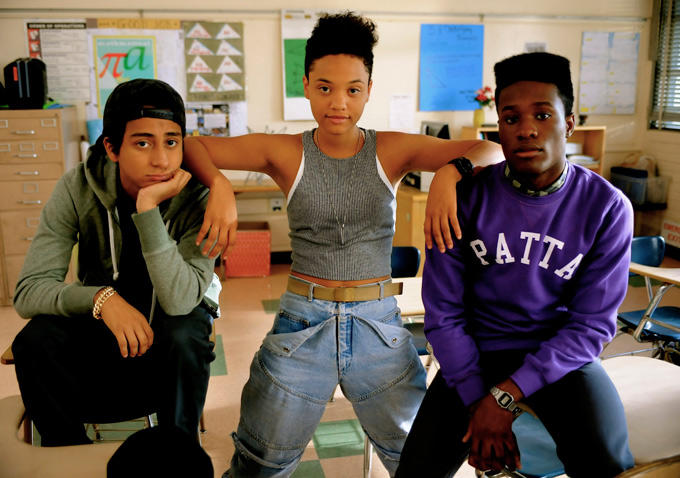
 In June, the film Dope was released in theaters and became the latest Black coming-of-age film to speak to Black youth. Even though having a Black nerd as the film’s main character set it apart from previous coming-of-age films like Juice or Friday, having it set in the hood made it no different than those films. While there is no doubting the cultural relevancy of hood films, more Black filmmakers should realize that not every Black youth experiences life as a hood film.
The genre of African-American hood films is said to have began with John Singleton’s 1991 film Boyz n The Hood. Released during the peak of the L.A.’s gang wars and nine months before the Rodney King riots, the film was a way to tell the story of the tenuous situation people faced in a certain part of Los Angeles. The film went on to receive universal praise, earn Singleton two Academy Award nominations, and fueled the Black cinema explosion of the ’90s.
More than two decades after Boyz n The Hood, the socio-political circumstances that surrounded the film’s opening aren’t that much different. Police brutality is still a serious problem nationwide, even as an Los Angeles Times article stated that the homicide rate in L.A. had dropped 300 percent. Yet, black cinema and other media have become stagnant and its audience has been craving something new.
Earlier this year, Variety magazine ran an article discussing a UCLA report on diversity in film and television. While it was right to comment on the need for diversity in terms of the people watching and creating projects, it barely touched on the need for diverse stories. The Black experience is not a monolith and it is high time we have mainstream films and other media reflecting that.
Instead of having a Black nerd finding his way out of the hood, we should have a teen film that has a Black nerd learning to embrace who they are in high school. Instead of having a hood film with a Black female character as a stereotypical prop, we should have a teen film that has a Black female as a complex person.
In fact, an opportunity for the latter suggestion may come soon. On Twitter, there is a woman of color movement going on through the hashtag #wocforalaskayoung. The movement aims to get a woman of color to play the role of Alaska Young in the upcoming teen film Looking For Alaska. The film is an adaptation of the young adult book by John Green.
In the book, Alaska Young’s character is a bookworm who is gorgeous and rebellious, but also a mess inside. If a Black woman were to play Alaska Young in the film, then it would validate the experiences of real Black girl nerds and real Black women with depression. It would also pave the way for other teen films with Black characters and diverse experiences.
Coming-of-age as a Black person should not be reduced to one film genre. Black youths exist in the hood, but don’t forget that Black youths exist outside it too.