10 Things About the Mistreatment of Black Soldiers During World War II You May Not Know

German POW

German POWs Treated Better Than Black Soldiers

In 1944, Corp. Rupert Trimmingham, a Black soldier of the United States armed forces, wrote to Yank Magazine, to expound upon the racial discrimination that he and his fellow men had experienced during the war. In his letter, he upheld the notion that most Black soldiers had realized at the time: German prisoners of war were treated much better than the Black soldiers of the United States. He wrote of one specific instance in which he and a handful of other Black soldiers had to go to the back of a restaurant to purchase a sandwich and coffee, while “about two dozen German prisoners of war” and two white American guards “entered the lunchroom, sat at the tables, had their meals served, talked, smoked, in fact had quite a swell time.”

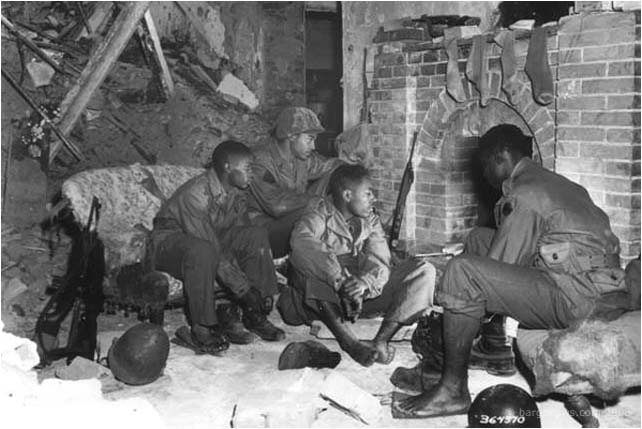
364th Infantry WWII

An Infantry of Black Soldiers Was Terrorized by Whites on American Soil

The tragedy of the 364th Army infantry stationed in Jim Crow-era Centreville, Mississippi, is rarely talked about. According to an entry released by the African American Registry, Black soldiers on the base were being killed left and right. Although the national high Army command “warned base and regimental commanders that they were to end racial violence or lose their jobs,” the violence still continued. Though there were originally 3,000 Black soldiers, only 1,000 were left on the personnel roster at the end of the war, with no official explanation.

Still independent.

We hope this story was worth your time. For over 14 years, Atlanta Black Star has stayed Black-owned and independently run. We didn't get here by waiting on ad budgets that were never built to prioritize us. Our readers did that.

Corporate support for Black media has always been thin. Outlets like ours get roughly 1% of the $170 billion spent on U.S. advertising each year, and that margin is shrinking further as advertisers walk back the DEI-linked commitments they made in 2020. That's the backdrop. It's not why we're asking.

The wider picture isn't any steadier. Newspaper ad revenue has fallen more than 80% since 2005, and local newsrooms are closing at a rate of roughly two a week nationwide. When outlets go under, it's rarely the ones built to center a Black perspective from the ground up that get to stick around.

We know a request for support isn't why you came here. But without readers choosing to fund this work directly, the depth of reporting we can do at home and abroad shrinks along with everyone else's. If you're not in a position to give, that doesn't change how much we value you as a reader.

If you are able to, a recurring contribution does more for us than a single one-time gift, because it lets us plan the next investigation instead of just the next invoice. It takes about 30 seconds, no long form, no account. Thank you for continuing to support independent journalism and freedom of the press.

Back to top