 A new bill signed into law by South Carolina Gov. Nikki Haley earlier this week shows exactly why the public has little faith in the widespread implementation of police body cameras.
What was pitched as a tool of transparency and a way for the public to hold police accountable has morphed into a gigantic waste of money and a major slap in the face.
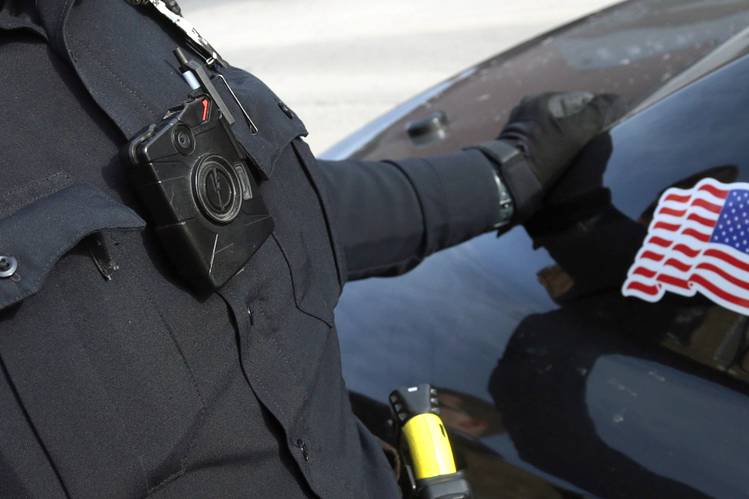
The new law will require every law enforcement agency in South Carolina to provide their officers with body cameras, but everything that is captured on those cameras will be barred from public viewing unless the police department decides otherwise.
During a time when communities are already struggling to have any sort of trust in the police, the department will be given even more control over what the public knows and doesn’t know about their actions while on duty.
The bill, along with its controversial wording, was introduced in May by the South Carolina House of Representatives.
The group cited privacy and safety concerns as reasons for why all “data recorded by a body-worn camera is not a public record subject to disclosure under the Freedom of Information Act.”
The public has long agreed that privacy for families must be taken into consideration when dealing with releasing footage to the public, but to give police officers ultimate discretion over what footage can be released makes the body cameras essentially useless.
“That’s a cop cover-up bill,” charged Jay Bender, an attorney for the South Carolina Press Association, according to Al Jazeera. “It’s to protect cops from the public finding out about their misconduct.”
While some have slammed such accusations as a case of severe paranoia in the past, recent cases have shown exactly why the public should have the right to view body cam footage under certain circumstances.
After all, South Carolina is the same state where Walter Scott and Ernest Satterwhite were fatally shot by police officers.
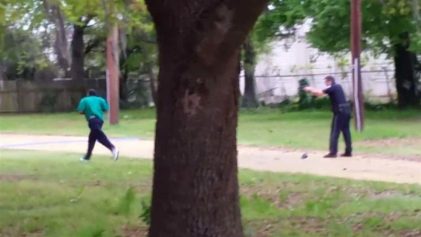
In Scott’s case, a bystander’s cellphone footage proved to be his family’s only chance to obtain justice.
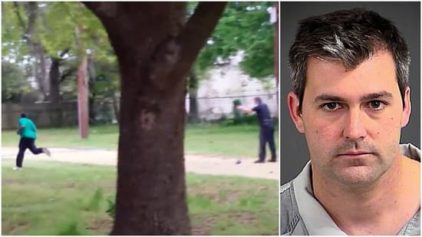
While officer Michael Slager insisted that he and Scott had a physical confrontation before he snatched his Taser, the cellphone footage showed Scott running away before Slager fired into his back.
He is then seen dropping a dark object, believed to be his Taser, next to Scott’s body.
In Satterwhite’s case, he drove home when an officer attempted to pull him over. When the officer got out the car and approached the window, he fired into Satterwhite’s window and killed him. The officer insisted the elderly man had a gun, but no gun was found on his person.
There was dash cam footage of the shooting but, to no surprise, the police department refuses to release it, citing concerns that it will tarnish the cop’s reputation.
In a country that has sold the image of police officers as the perfect American hero for so long, video footage of police brutality and misconduct has been delivering a harsh blow to that law enforcement fairy tale.
Video footage of Cleveland officer Timothy Loehmann pulled back the curtain on his lie that he ordered 12-year-old Tamir Rice to put down a toy gun at least three times before he fired.
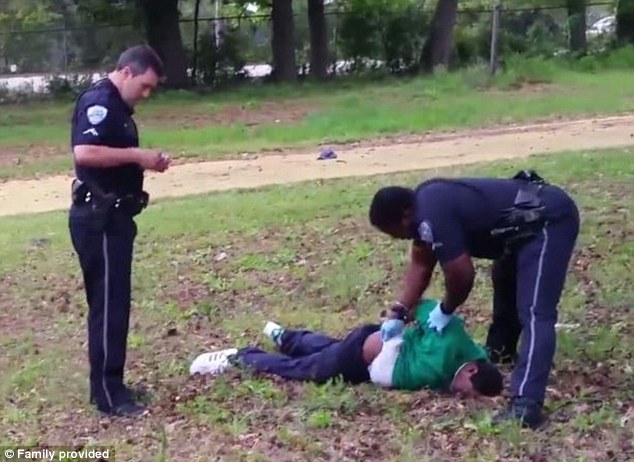
Walter Scott
A nearby surveillance camera proved that Loehmann shot at Tamir seconds after arriving to the scene. In fact, the police car hadn’t even come to a complete stop before Loehmann fired at the preteen.
The point is, without such videos, too many citizens wouldn’t even have a shot at justice. They would be unfairly told and sold lies about what happened to their loved ones and convinced that they deserved to die.
As the death of Michael Brown showed the nation, when it comes to an officer’s word versus a citizen’s, the officer will almost always come out on top.
Despite the clear flaw in the “cop cover-up bill,” Haley is convinced that his piece of legislation will move the state in a positive direction.
“This is going to strengthen the people of South Carolina,” Haley said of the new bill at the signing ceremony on Wednesday. “This is going to strengthen law enforcement and this is going to make sure that Walter Scott did not die without us realizing we had a problem.”
It adds to a growing list of lies that have been told about Scott’s death.