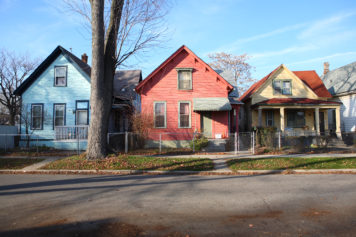
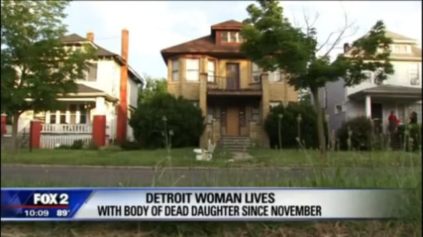
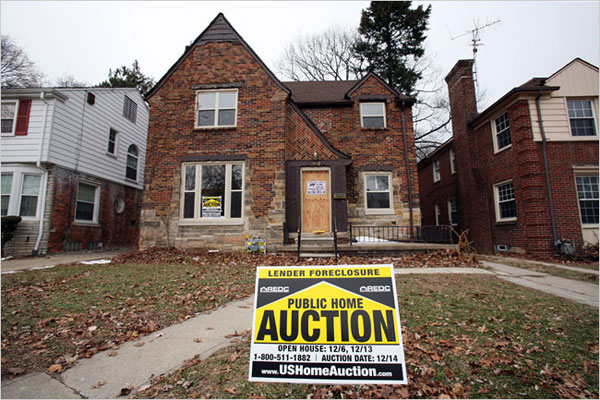
 Back in May, the city of Detroit was hit with a wave of foreclosures that pushed thousands of families out of their homes and left just as many empty homes sitting on the market with no movement.
The once charming homes were left without any care for quite some time and they began deteriorating months, in some cases years, before they were officially seized from the families that once inhabited them.
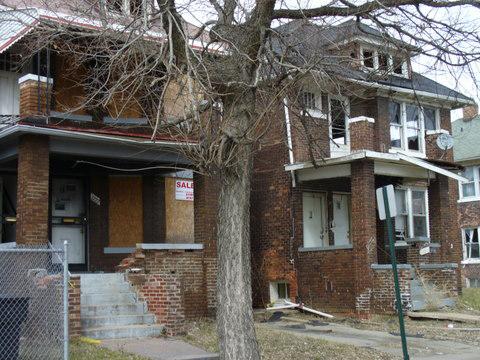
What’s left now is a vast collection of foreclosed, run down homes. Weeds can be seen climbing the sides of the chimneys, windows have been boarded up and entire roofs have finally given way to the weight of Mother Nature.
Now the city is struggling to get someone, anyone, to purchase the homes and restore them to their initial charm and beauty. Many of the homes have been sold at auction for roughly $1,000 while some of the worst abandoned properties have gone to the Detroit Land Bank Authority, a quasi-governmental agency.
“Properties come to us, only after nobody else wants them anymore,” Craig Fahle, the agency’s director of public affairs, told NPR. “They’ve gone through foreclosures and they come to us when they’re in this kind of condition.”
That “kind of condition” Fahle is referring to is such a deteriorated and dilapidated condition that the cost of repairing the property often towers over the value of the home.
With a radiator missing, kitchen cupboards gone and no salvageable windows, Fahle says he would be happy to get $25,000 for the home. If he gets a lower offer, however, he admits that he’d still be willing to make a deal just to get another home taken off his hands.
“We have to cut the grass on the properties,” he explained to NPR. “We can’t do it every week or anything. We’ll do it a couple times a summer because we own 88,000 parcels of land in the city, as a land bank. We own one-quarter of all the property in the city of Detroit.”
City officials have tried their best to speed up the process of selling all the abandoned homes but Mayor Mike Duggan realizes the process isn’t moving as quickly as necessary.
So officials kicked off a program that offers city employees and their families a 50 percent discount on the homes but even that hasn’t made a major difference.
 The problem, Duggan says, comes down to the mortgages.
“A typical house on the auction that you’ll buy it for $10,000, you have to put $20,000 in to fix it up,” he explained to NPR. “It’s almost impossible to get a mortgage in that circumstance.”
But a new partner is helping city employees deal with the problem by offering loans for up to triple the value of the homes.
Fortunately, that gave the market the extra push it needed to attract some workers back into the city. Once they fix up the homes, they are left with a charming abode with more space and more appealing features.
But that’s where the catch still lies—fixing up the homes.
Buyers aren’t into potential as much as they are into move-in ready properties and since many of the properties need substantial work, buyers are still coming in at a slow place as property values in the community continue to plummet.