 For months, national headlines have been underscoring the widespread tragedy of the deaths of unarmed Black men in America.
Think pieces have traced the tragedies that befall Black men and how the criminal justice system is designed to lead to their mass incarceration.
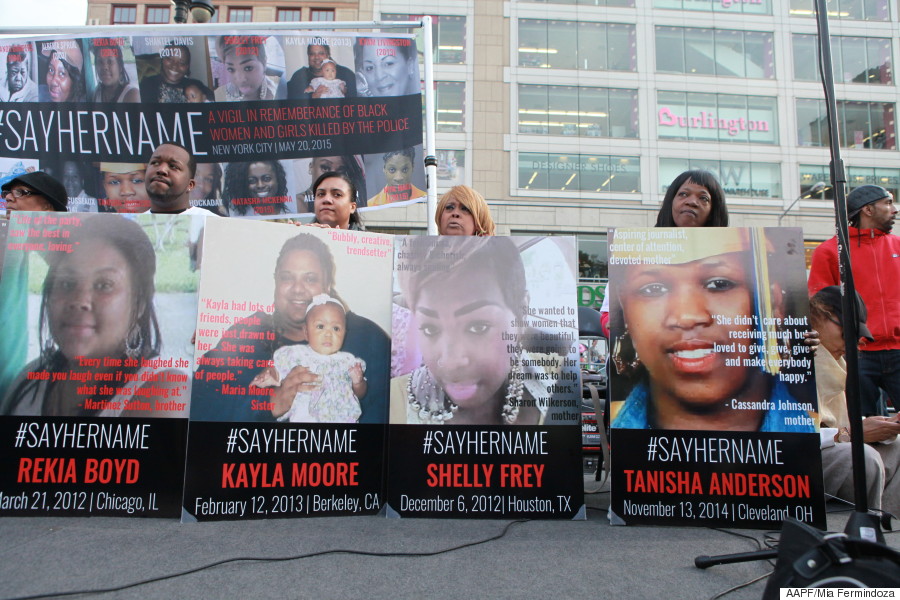
It’s a cause that deserves every ounce of attention it has received, but in its shadow remains the countless names Black women who struggle to garner the same attention when it is their lives on the line.
This is what has caused poet Aja Monet to rally behind the #SayHerName movement with a powerful work that brought attention to the names that haven’t been heard in every corner of the country.
Artists and activists like Monet have been working to expand the attention spans of America to include the entire Black community as a whole, as both Black men and women are constantly trying to lift off the unbearable weight of oppression in a country that has long forgotten about them.
She lists off a series of names like Melissa Williams and Darnisha Harris, hoping that through her art she could give them the public platform they deserve.
But for Monet, she wants the message of the movement to even reach beyond the borders of police brutality.
In more ways than one, she notes, Black women’s bodies are highly policed and their lives are at risk in a society that was founded on principles that rejected both Black people and women.
So as she lends her voice to support her Black brothers, she also hopes to finally pull back the curtains on the brutality that plagues Black women as well.
“Like, of course it’s difficult to quantify any brutality against human beings,” Monet told the Huffington Post. “It’s not more difficult when it comes to black women, I think it’s just easier for us to ignore them because if we acknowledge them then we must acknowledge all of the women affected by violence and brutality, not just by police but by an entire patriarchal, racist system.”
For that reason, she believes that while #SayHerName is an important movement, it’s also just the very surface of the issues that America will have to face but in order to dig deeper into the country’s problems. Monet says people must be honest about what it takes to garner their attention even when the discussion is about their own people and could impact their own livelihood and well being.
Is part of the reason Black women haven’t been catapulted into the national limelight because their names weren’t turned into hashtags and their deaths were not accompanied by slogans?
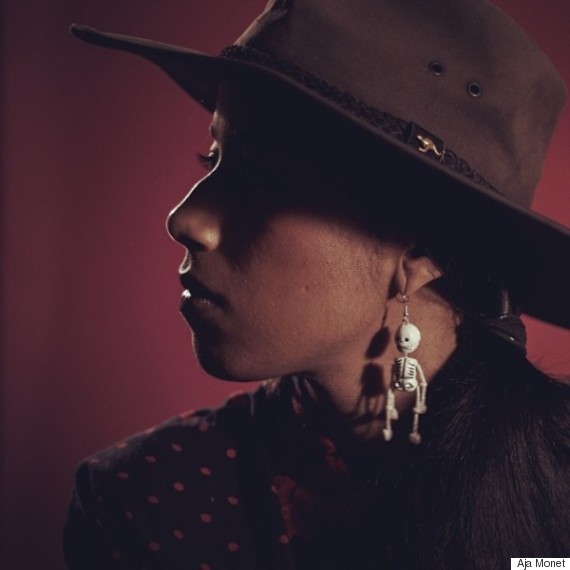 “I think #SayHerName is the surface level of the issues, but beneath that there is the real question of ‘Why?’ Why do I need to make saying her name a hashtag for you to pay attention?” Monet questioned. “The goal is to use this as an opportunity to redirect the attention of people, to hopefully get folks researching the names and stories of all the women we’ve lost. To educate themselves so we are all more informed on how policing works. Black women’s bodies are the most policed bodies in this country.”
She revealed that she tried to write a poem in honor of Rekia Boyd, but felt it wasn’t “ready to be done” just yet.
When a fellow poet approached her with the opportunity to pen a heartfelt work for #SayHerName, she was happy to oblige.
Now, she hopes her art will continue to have the powerful impact it has had in the past as she continues to dive deep into the realm of political and social issues.
According to her, art like hers will be essential to all movements going forward.
“No great change takes place without art,” she added. “It’s necessary.”