6 Reasons Why Black Cops Are Just As or More Likely To Propagate Racism in Law Enforcement

062311-news-national-black-philadelphia-police

They May Perceive Themselves as Blue, Not Black

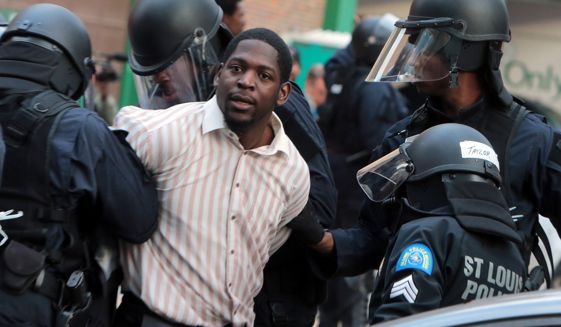
Social psychologist Adam Waytz has frequently noted that when people are in groups, they tend to lose their sense of self-awareness; therefore, they identify with the group at large rather than their personal selves. In other words, a Black officer may not completely perceive himself or herself as Black when they are on the job. Instead, they simply identify as a police officer and, therefore, are just as likely as any other officer to act on racially charged biases when dealing with Black suspects.
 

869afdd92ceef22f660f6a7067007acc_c0-253-4500-2875_s561x327

Even Then, It’s Not the Personal Perception That Matters Most

The very idea that a person’s own race can determine the racism behind their actions is one that makes the inaccurate assumption that the perception of one’s self is the key factor in racial discrimination. Instead, the focus should be how race impacts one’s perception of others. “But social psychologists and criminal justice experts say this question fundamentally misunderstands how institutional racism affects everyone, regardless of race,” Vox explains. “Racial bias isn’t necessarily about how a person views himself in terms of race, but how he views others in terms of race, particularly in different roles throughout his everyday life. And systemic racism, which has been part of the U.S. since its founding, can corrupt anyone’s view of minorities in America.”


Democracy needs journalism it can trust.

This election season, the stakes are higher than usual — and so is the pressure on newsrooms to soften their coverage, stay quiet, or just disappear. Independent reporting, the kind that answers to readers instead of advertisers or political pressure, matters more in a moment like this, not less.

For over 14 years, Atlanta Black Star has stayed independent and reader-funded. We have no corporate owner and no shareholders telling us what to cover or how to cover it. That independence is also our biggest vulnerability: nothing protects it except readers choosing to fund it directly.

Newspaper ad revenue has fallen more than 80% since 2005, and local newsrooms are closing at a rate of roughly two a week nationwide. When outlets go under in a moment like this, it's rarely the independent, reader-funded ones that get to stick around.

We know a request for support isn't why you came here. But without readers choosing to fund this work directly, the depth of reporting we can do at home and abroad shrinks along with everyone else's. If you're not in a position to give, that doesn't change how much we value you as a reader.

If you are able to, a recurring contribution does more for us than a single one-time gift, because it lets us plan the next investigation instead of just the next invoice. It takes about 30 seconds, no long form, no account. Thank you for continuing to support independent journalism and freedom of the press.

Back to top