10 Fascinating Facts about the Zulu’s Victory Over the British at the Battle of Isandlwana

(c) The Royal Welsh Regimental Museum Trust; Supplied by The Public Catalogue Foundation

(c) The Royal Welsh Regimental Museum Trust; Supplied by The Public Catalogue Foundation

Contrary to popular belief, the Zulus did not win because the British were unarmed.

Some historians have attempted to downplay this Zulu victory by claiming that the British forces lacked ammunition. However, Horace Smith-Dorrien, a British survivor of the Battle of Isandlwana, wrote a letter to his father admitting that he had acquired a supply of ammunition and had distributed it to the British troops of the front line. In addition, an article on Military-history.org conveys that, in 2000, “an archaeological survey of the site found the remains of the tin lining of a number of boxes along the British firing positions.”
via thediehards.co.uk

via thediehards.co.uk

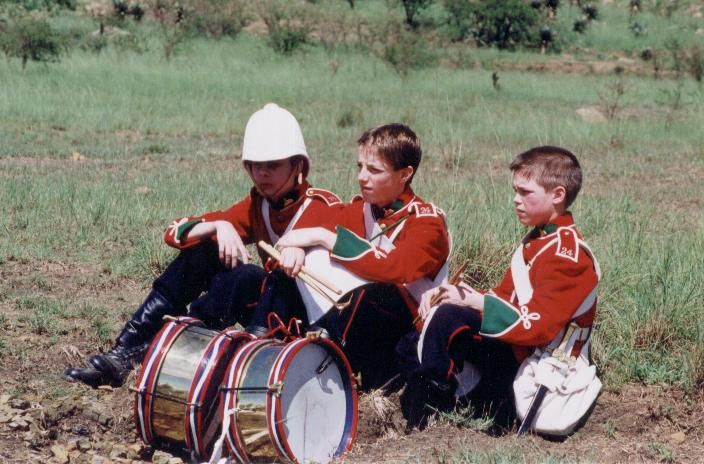
The myth about Zulu warriors torturing British drummer boys was debunked.

The same article has debunked the myth that British drummer boys were tortured by the Zulu warriors. The story of Lord Chelmsford’s men seeing “young drummer boys’ of the 24th Regiment hung up
on a butcher’s scaffold and ‘gutted like sheep” has been widely-accepted throughout history. Yet, the drummer boys of the Battle of Isandlwana were not children at all; “the youngest was 18 and the oldest in his 30s.” In addition, today’s historians admit that “no single case of torture was proved against [the Zulus].”


 

Democracy needs journalism it can trust.

This election season, the stakes are higher than usual — and so is the pressure on newsrooms to soften their coverage, stay quiet, or just disappear. Independent reporting, the kind that answers to readers instead of advertisers or political pressure, matters more in a moment like this, not less.

For over 14 years, Atlanta Black Star has stayed independent and reader-funded. We have no corporate owner and no shareholders telling us what to cover or how to cover it. That independence is also our biggest vulnerability: nothing protects it except readers choosing to fund it directly.

Newspaper ad revenue has fallen more than 80% since 2005, and local newsrooms are closing at a rate of roughly two a week nationwide. When outlets go under in a moment like this, it's rarely the independent, reader-funded ones that get to stick around.

We know a request for support isn't why you came here. But without readers choosing to fund this work directly, the depth of reporting we can do at home and abroad shrinks along with everyone else's. If you're not in a position to give, that doesn't change how much we value you as a reader.

If you are able to, a recurring contribution does more for us than a single one-time gift, because it lets us plan the next investigation instead of just the next invoice. It takes about 30 seconds, no long form, no account. Thank you for continuing to support independent journalism and freedom of the press.

Back to top