Walter Scott
If America hadn’t become a nation that excessively incarcerates Black men for minor, nonviolent offenses, Walter Scott’s funeral would not be happening today because he’d likely still be alive.
That’s the conclusion drawn by Ezekiel Edwards, Director of the ACLU’s Criminal Law Reform Project.
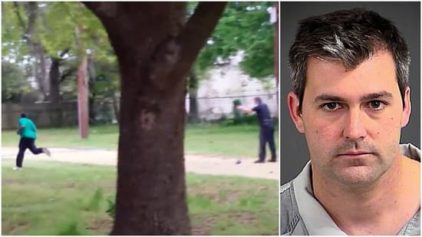
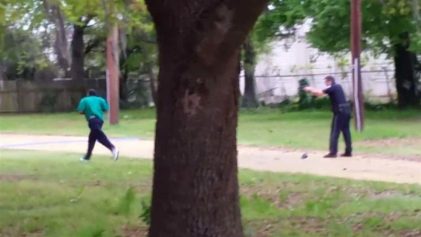
Edwards traces a direct connection between the explosion over the last three decades in the incarceration of Black men and the fears coursing through Walter Scott’s head as he was being pulled over by police. Scott, who reportedly owed more than $18,000 in child-support payments, had a bench warrant for his arrest for outstanding payments when he bolted from his car and fled after North Charleston officer Michael Slager pulled him over.
Scott had been arrested on numerous occasions for the child support payments and his parents believe that’s why he ran.
“I believe he didn’t want to go to jail again,” Walter Scott Sr. told the “Today” show. “He just ran away.”
A big crowd is expected in North Charleston this afternoon for Scott’s funeral services.
“The killing of Walter Scott was a public execution,” Rev. Nelson B. Rivers III, a pastor at Charity Missionary Baptist Church in North Charleston, said to the Huffington Post. “There was nothing he did that deserved it.”
Edwards suggests that jail isn’t the proper solution for child support arrears.
“Our country’s addiction to arrests and incarceration has created fear in poorer communities of being arrested for minor, nonviolent offenses, prompting interactions with police that we have seen time and again escalate quickly into unnecessary tragedies,” Edwards writes on the ACLU website. “A moment of conjecture: If Walter Scott does not fear that a routine traffic stop or owing money is going to lead to his arrest and possible imprisonment, does he flee from the officer? Is he alive today?”
Before Scott’s killing, the ACLU last week released a report showing that since the White House released its task force report on 21st century policing at the beginning of March with much fanfare, American police officers have been busy: They shot and killed 115 people across the United States in the month of March.
The 115 people killed in those 31 days averages out to more than three people per day who fell victim to officers’ bullets. Because departments aren’t required to submit data on police-involved killings—one of the recommendations of the task force is that the reporting mechanisms be improved—the ACLU took the time to count the shootings using the Google search engine.
“Too many of this [last] month’s victims fit a profile we know all too well — unarmed men of color, some of whom have psychiatric disabilities. Victims like Charly Keunang in Los Angeles, Tony Robinson in Madison, Wisc., Anthony Hill in Dekalb County, Ga. and Brandon Jones in Cleveland, confirm that the problems with policing are national in scope,” said Kanya Bennett, Legislative Counsel for the ACLU in Washington, in a piece on the ACLU website accompanying the report’s release.
The numbers in January and February were slightly better—91 killed in January by police and 85 killed in February, according to the ACLU.
“This isn’t a problem concentrated in a few rogue police departments. Even those police departments with the best of intentions need reform. Take for example the Department of Justice report that Philadelphia police shot 400 people — over 80 percent of them African-American — in seven years. This is in a city where the police commissioner is an author of the very same White House task force report calling for police reform,” Bennett said, referring to Philadelphia Police Chief Charles Ramsey, chairman of the White House Task Force.
Bennett noted that the police departments were much more likely to use excessive and deadly force against people of color, particularly people with psychiatric disabilities.
“Jaywalking and selling individual cigarettes should not result in death, nor should failing to take [psychiatric] medication,” Bennett said.
The sheer impact of the number of killings being compiled demonstrates why police departments have been so reluctant to fully participate in reporting their stats. It’s also why the gun rights lobby has been so resistant to allowing agencies to collect numbers on gun deaths. There’s a power in the numbers that can’t be denied, a motivating shock to the public’s system.
Edwards said these killings have become a national “nightmare.”
“Police gunning down unarmed black men and boys is an American horror film that keeps getting replayed. Except that it isn’t a movie you can turn off: It’s a painful, outrageous, and unacceptable reality,” Edwards writes. “Walter Scott should be alive, and at home. Instead, he’s dead. His death is not an aberration. It is a direct result of the current state of policing in many parts of America today.”