Women Played Prominent Roles
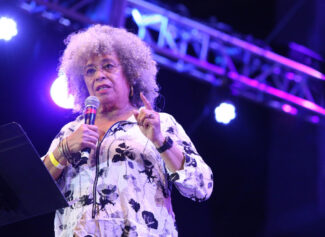
Women, dedicated to the goals, often looked beyond obstacles and performed many of the basic tasks necessary for the operation of the movement. They wrote articles for the Black Panther newspaper, tutored children in the liberation schools, offered legal advice to prisoners, organized rallies, distributed fliers and pamphlets and spoke to their local communities about solutions to economic and social problems. And, of course, women like Angela Davis (above) and Elaine Brown took leadership roles and plotted strategy.
 The Fear Factor
Many whites, and a number of Blacks, saw the movement as a Black separatist organization bent on segregating Blacks and whites and undoing the important work of the Civil Rights Movement. The solutions that some Black Power leaders advocated seemed only to create new problems. For example, they suggested that Blacks receive paramilitary training and carry guns to protect themselves. Though these individuals insisted this device was solely a means of self-defense and not a call to violence, it was still unnerving for many to think of armed civilians walking the streets.