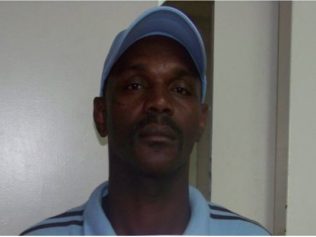
Black Man, 54, Found Hanging From a Tree in Mississippi 17 Days After He Went Missing

Otis Byrd

Otis Byrd

Otis Byrd, 54, went missing on March 2, after being dropped off at the Riverwalk Casino in Vicksburg, Mississippi. On Thursday, 17 days later, Byrd’s body was found hanging from a tree about a half mile from his house in Claiborne County.

The discovery answered the questions of family members who wondered where Byrd was and who filed a missing persons report with the Claiborne County Sheriff’s Department on March 8. But now there are many other questions that have arisen, such as whether Byrd was killed and how his body got in the tree.

A hanging in Mississippi is particularly disturbing because it is the state that had the most lynchings during the 100 years after Reconstruction, with 581 on record, according to statistics compiled by the Tuskegee Institute.

The investigation has been joined by the FBI and the Mississippi Bureau of Investigation. The local chapter of the NAACP has also asked the Justice Department to join the investigation.

Coroner J.W. Mallett would not release any details on the death, so it isn’t known if authorities are considering it a homicide.

FBI Supervisory Special Agent Jason Pack told the media that the FBI and Mississippi Bureau of Investigation are on the scene where the body was found hanging in the woods near Roddy Road.

Byrd is known to authorities in Claiborne County because he was convicted in 1980 of murdering Lucille Trimm there while robbing her of $101. He served 25 years in prison and was paroled on Nov. 2, 2006.


Democracy needs journalism it can trust.

This election season, the stakes are higher than usual — and so is the pressure on newsrooms to soften their coverage, stay quiet, or just disappear. Independent reporting, the kind that answers to readers instead of advertisers or political pressure, matters more in a moment like this, not less.

For over 14 years, Atlanta Black Star has stayed independent and reader-funded. We have no corporate owner and no shareholders telling us what to cover or how to cover it. That independence is also our biggest vulnerability: nothing protects it except readers choosing to fund it directly.

Newspaper ad revenue has fallen more than 80% since 2005, and local newsrooms are closing at a rate of roughly two a week nationwide. When outlets go under in a moment like this, it's rarely the independent, reader-funded ones that get to stick around.

We know a request for support isn't why you came here. But without readers choosing to fund this work directly, the depth of reporting we can do at home and abroad shrinks along with everyone else's. If you're not in a position to give, that doesn't change how much we value you as a reader.

If you are able to, a recurring contribution does more for us than a single one-time gift, because it lets us plan the next investigation instead of just the next invoice. It takes about 30 seconds, no long form, no account. Thank you for continuing to support independent journalism and freedom of the press.

Back to top