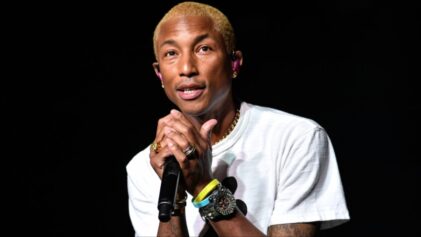
Black music has been hijacked by white artists for decades, and so maybe the ruling that Robin Thicke and Pharrell Williams have to pay Marvin Gaye’s estate $7.4 million is retroactive penance for so many unpunished bad acts of the past.
From Elvis Presley to the Beach Boys to the Allen Brothers in the 1920s and on and on, music created by Black artists has been recorded and performed by whites who paid nothing for the privilege. This ruling on Gaye’s classic song, “Got To Give It Up,” cannot make up for the myriad past discretions. But many Black music fans view it as a nice start.
Inside the industry, however, there is a fear that the decision throws the music business into a tailspin. After all, how many songs these days sound like other songs? Some music experts wonder aloud if the ruling that Thicke’s and Williams’ “Blurred Lines” too closely resembled Gaye’s classic hit, “Got To Give It Up,” will be catastrophic to the industry.
“If the Internet can’t kill music,” writer Michaelangelo Matos said to The Atlantic, “then the courts will.”
The issue: When does an artist’s vibe with past music become an infringement, or stealing? Even Thicke and Williams admitted the songs’ chords sound alike. But a lot of chords in songs sound like chords in other songs, they contended.
During the trial, Thicke reportedly took to the piano to show how common it is for popular songs to resemble each other. Meanwhile, Gaye’s estate hired a musicologist, who turned the two tracks into stripped-down jingles so that jurors could compare core elements.
Questlove put it this way to New York magazine: “Look, technically it’s not plagiarized. It’s not the same chord progression. It’s a feeling. Because there’s a cowbell in it and a fender Rhodes as the main instrumentation — that still doesn’t make it plagiarized. We all know it’s derivative. That’s how Pharrell works. Everything that Pharrell produces is derivative of another song — but it’s an homage.”
Thicke has said that Gaye’s “Got to Give It Up” was one of his favorite tunes and that he and Pharrell discussed it in the studio. But in court, he testified that he’d been high on Vicodin during the recording process and was not actively involved in the production of the song.
Nona Gaye, the iconic artist’s daughter, wept when the verdict was handed down that infringement took place but was not “willful.”
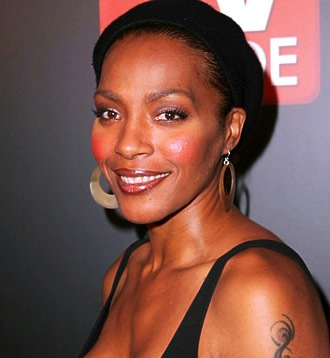
Nona Gaye, Marvin Gaye’s daughter, was, of course, happy with the ruling.
“I feel free from the pain,” she said after the verdict. “It felt like a painful joke, those two years knowing our song was copied and not getting any serious feedback from their side. That’s our father, that’s what he left for us, our legacy.”
Williams and Thicke said in a statement, “While we respect the judicial process, we are extremely disappointed in the ruling made today, which sets a horrible precedent for music and creativity going forward. Pharrell created ‘Blurred Lines’ from his heart, mind and soul and the song was not taken from anyone or anywhere else. We are reviewing the decision, considering our options and you will hear more from us soon about this matter,” it read.
That “not willful” judgment, according to The Atlantic, reduces the amount of money the Gaye estate gets, but should increase the fears of anyone who worries that the standard has now been lowered for what kind of musical borrowing is legally actionable.
Historically, pop music has been driven by songs that remind listeners of other songs. Variations of James Brown’s music were consistently stolen by white artists in the 1960s and ‘70s, with Brown receiving no compensation. He was just one of many.
Artists fear lawsuits will become the next rage. Juries, with ears far less discerning that artists, will shape the way music is crafted.
Spencer Kornhaber of Atlantic listened to stripped down version of the beats of two songs: “I’ll admit to hearing a resemblance that’s not just vibe,” he wrote. “I don’t know whether that resemblance is or should be illegal, though. That’s the crazy thing about this case; it came down to a jury’s ears, and now there might be repercussions for everyone else’s.”