 Nigerian Obinna Ukwuani went to the U.S. to finish his secondary education and got involved in competing in a robotics league. Two things grew out of it: first, he ended up teaching high school students robotics, and second, he believes it helped him in his successful application to teach at MIT.
Having taught students robotics for two years, the program was cancelled in the third year. When he told his father about this in a phone call, he rather off-handedly suggested, Why don’t you do it in Nigeria? Ukwuani spent a year scoping the idea and quickly discovered that there were no programs like it in Nigeria: “I was confident before I started that parents would pay for kids to go…There was nothing like this for the kids.”
“At MIT, I called together classmates who said they were interested in starting it and we approached companies in Nigeria, looking for funding. We soon locked in enough funding for the first year.”
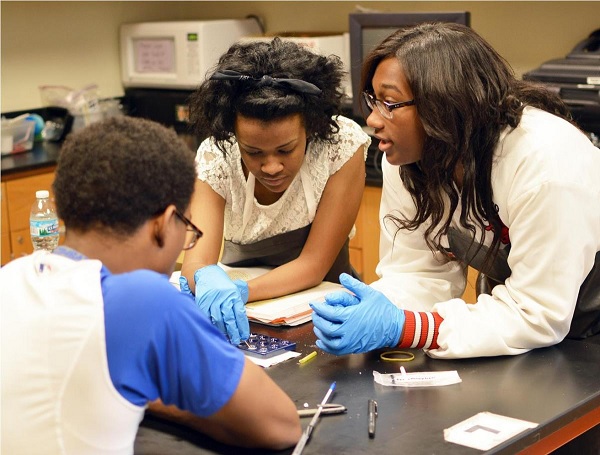
In 2012, he ran the program for the first time with 30 kids, the year after there were 45 kids and the year after that 35 kids. The curriculum was 70 percent robotics and 30 percent preparation for college.
There’s no vocational niche for anybody who knows robotics in Nigeria yet but that’s not really the point. Like Seymour Papert’s work with Logo, getting students to program a robot is about something else. The curriculum has three elements: applied math and science, computer programming and engineering design.
“We use robotics as a platform for creative problem solving and programming,” he said.
In addition, its students begin to understand engineering principles, leadership and teamwork collaboration. From my own experience of listening to managers in Africa talk about the skills that are currently lacking, these are all on the list.
“In 3 days, kids who’d never seen a computer were writing code and it’s a five week program. So they can plan and write programmes to navigate robots.” For all of these reasons, it attracts both parents and kids who are “dissatisfied with the education status quo and are seeking more opportunities,” he said. The learning by rote aspects of education in Africa are one of its greatest weaknesses in a world that requires flexible and creative thinking.
As an education entrepreneur, his ambition has not stopped at running a summer school. He wants to build the first STEM (Science, Technology, Engineering and Maths) secondary school in Nigeria, if not the whole of West Africa.
Read More at Smartmonkey Tv