8 Things You Didn’t Know About The Mistreatment Of Black Children During Jim Crow

Birmingham_campaign_dogs
Children of Birmingham Face Attack Dogs and Fire Hoses

On May 2, 1963, thousands of young people left their classrooms and gathered at the 16th Street Baptist Church in Birmingham, where they spilled out in groups of 50 to march downtown. The next day, the police, led by the infamous Bull Connor, brought out fire hoses and attack dogs and turned them on the children, according to an account on The Daily Beast. It was a scene that caused headlines across the nation and around the world — and which many historians believe turned the national tide of public opinion in support of the civil rights movement.
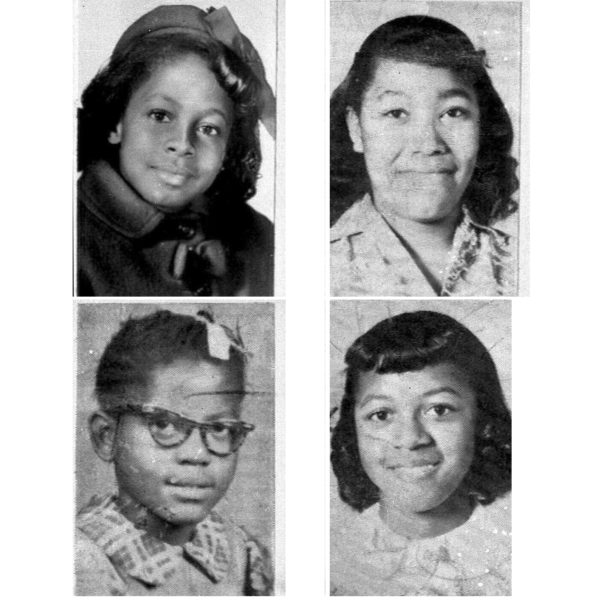


MCNAIR ROBERTSON COLLINS WESLEY

Four Little Girls — and Two Little Boys

In the early morning of Sunday, Sept. 15, 1963, Bobby Frank Cherry, Thomas Blanton, Herman Frank Cash and Robert Chambliss, members of United Klans of America, a Ku Klux Klan group, planted at least 15 sticks of dynamite with a time delay under the steps of the 16th Street Baptist Church, close to the basement. Four girls — Addie Mae Collins (age 14), Carol Denise McNair (age 11), Carole Robertson (age 14) and Cynthia Wesley (age 14) — were killed in the bombing, and more than 20 additional people were injured. About seven hours later, two Black boys were shot to death — 16-year-old Johnny Robinson was shot by police, reportedly after they caught him throwing rocks at cars driven by white people; 13-year-old Virgil Ware was shot twice with a revolver as he sat upon the handlebars of a bicycle ridden by his brother in a residential suburb, 15 miles north of the city.
Independent journalism still matters.

We hope this story was worth your time. For over 14 years, Atlanta Black Star has stayed Black-owned and independently run. We didn't get here by waiting on ad budgets that were never built to prioritize us. Our readers did that.

Corporate support for Black media has always been thin. Outlets like ours get roughly 1% of the $170 billion spent on U.S. advertising each year, and that margin is shrinking further as advertisers walk back the DEI-linked commitments they made in 2020. That's the backdrop. It's not why we're asking.

The wider picture isn't any steadier. Newspaper ad revenue has fallen more than 80% since 2005, and local newsrooms are closing at a rate of roughly two a week nationwide. When outlets go under, it's rarely the ones built to center a Black perspective from the ground up that get to stick around.

We know a request for support isn't why you came here. But without readers choosing to fund this work directly, the depth of reporting we can do at home and abroad shrinks along with everyone else's. If you're not in a position to give, that doesn't change how much we value you as a reader.

If you are able to, a recurring contribution does more for us than a single one-time gift, because it lets us plan the next investigation instead of just the next invoice. It takes about 30 seconds, no long form, no account. Thank you for continuing to support independent journalism and freedom of the press.

Back to top