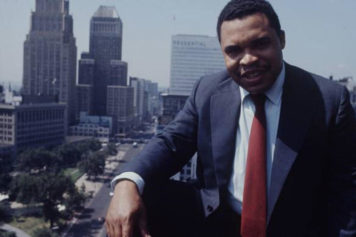
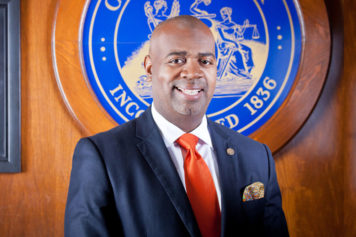
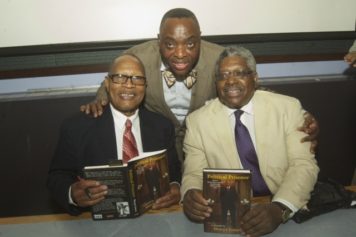
Iconic poet Amiri Baraka passed away at the age of 79 last month, but his social impact and dedication to disseminating important messages about racism in America continue to live on both through his work and his sons —particularly Newark Mayor Ras Baraka.
It’s only been a few weeks since the world bid farewell to one of the most influential poets in history.
During a time when discussions about the realities of racism were highly controversial and extremely taboo, Amiri Baraka refused to muffle his voice.
Rather than hide from his radical beliefs, he embraced them and fused them with his art.
While he never shied away from using his poetry as a strong platform, Arnold Rampersad, a professor emeritus at Stanford University, said the process to becoming a radical poet was certainly a gradual one for Baraka.
“He, like Langston Hughes before him, like Ralph Ellison to some extent, understood the pre-eminence, you’d have to say, of Black Music in Black American expressive culture,” Rampersad said of Baraka, according to NPR. “Gradually, he became radicalized and brought race more and more into his work until it became the central element of his writing, and for that he was vilified in many circles. But I think it was the beginning of a flood of similar poetry and other forms of writing from young Black writers who became empowered as a result of the freedoms that he commissioned in the writing of poetry.”
According to Rampersad, Baraka started writing poetry as a part of the Beat movement in New York City’s Greenwich Village of the 1950s.
As he grew as an artist, he started focusing more and more on inserting his political views into his work as he also became a prominent figure in the Black Power movement in the 1960s.
While the Black community respected the fury and passion in Baraka’s voice and the musicality of his poetry, mainstream media outlets were hesitant to embrace him.
Instead, his works were mostly published in small alternative presses.
“They would publish you if you had the same story to tell as mainstream white writers,” Baraka once said, according to NPR. “But because no oppressed nationality can tell that story — if you’re true to history, then they respond by saying, well you’re complaining too much. You’re always complaining. We don’t want complaints. People don’t want complaints.”
Those comments fell on deaf ears.
Baraka continued producing iconic poetry and improved the “strength” of his art so that his views would be accepted along with his works.
“As a political artist, I think you have to learn how to create art, no matter what your ideology is,” he continued. “I think if, as Mao Tse-tung said, you are successful, then what you do is combine high artistic quality and revolutionary politics. And then I think the real hallmark of an effective political artist is that the politics is accepted with the art, and is made influential because of the strength of the art.”
Rampersad said Baraka’s emphasis on racial and economic inequality and the way he integrated it into his work was “absolutely prophetic,” and now it is Baraka’s son’s turn to go against the grain and push for equality even when the odds are against him.
Mayor Baraka has been making headlines for his unconventional methods to deal with major issues in his 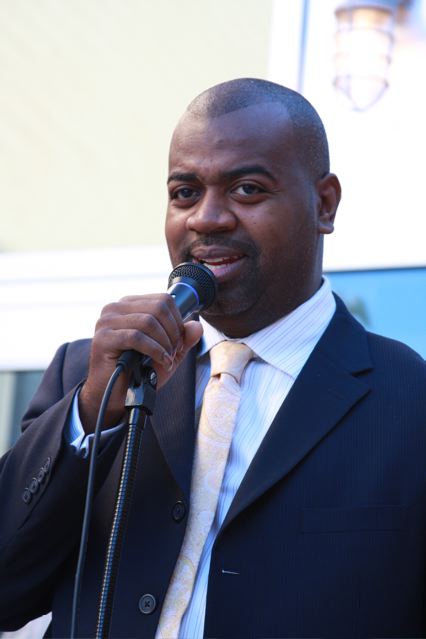 community and his willingness to challenge anyone who serves as a threat to equality and overall progress of the Black community.
In addition to sending a detailed letter to President Barack Obama to express his clear opposition to the Newark Public Schools reorganization, he also brought gang leaders together in an attempt to combat the crime that is currently plaguing the New Jersey city.
Baraka held a meeting with different gang leaders in a city church with security provided by the Nation of Islam.
Outside the church, the Newark Police Department monitored the area for added security.
It certainly isn’t the average approach for a politician to take when attempting to tackle local crime rates and gang violence, but considering who his famous father is it doesn’t necessarily come as a surprise.
The same way his father made bold and fearless decisions as an artist, a poet and a committed Marxist, his son is making the same type of fearless decisions as a politician that have the potential to foster real change.