 Gang violence in notorious Los Angeles-area neighborhoods of Compton and Englewood has dipped significantly in recent years, a stunning development in one of the country’s most bloody and seemingly never-ending rivalries.
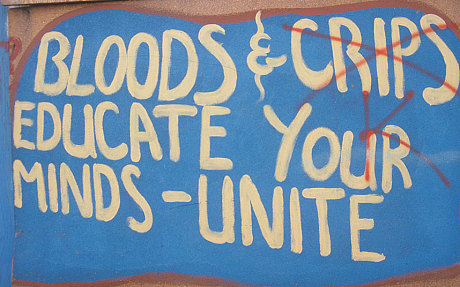
The decrease after thousands of killings of young Black men and men of color can be attributed to the “elders” of the Bloods and the Crips finally coming to the obvious conclusion that killing each other served no good purpose.
The sides have worked together to temper that devastating cycle of revenge attacks while also encouraging the young to avoid gang life. This is a startling progression, as the Bloods and Crips were so violent and ruthless that they became legendary for their willingness to die in the streets.
Formally, it’s called the Gang Reduction, Youth Development project that has curbed the mayhem. Andre Christian, a former member of the Grape Street branch of the Crips, told Sky News: “If you don’t save lives first, you’re not going to be able to talk to them. Once you get to the point where you’re keeping them alive, now you can start educating. Economics play a part but you’ve got to save lives.”
Christian and other reformed gang members patrol schools in the Watts neighborhood, like peace officers, reinforcing for youths the dangers of gang life and the value of avoiding it.
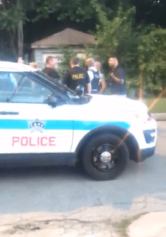
Additionally, the GRYD works to bridge the significant gap between the police and the community.
In 52 days, Kathy Wooten lost two sons to gang violence. She works with the GRYD project to prevent other mothers from experiencing her grief.
“I know I can’t save the world, and I know I can’t be a voice everywhere,” Wooten said to Sky News. “But I know I can be a voice and I am a voice in this community. We need to start getting along to the point where we don’t shoot each other on sight.”
Police officers, while hopeful of an end to the violence, seem skeptical it will ever be over. Deaths in gang-related activity are down more than 10 percent. But Los Angeles has roughly 450 gangs within the boundaries of the city and 45,000 documented gang members. Those numbers double when you consider the whole region.
“I don’t think it can ever be won,” Sgt. Nick Milazzo said. “We just have to contain it somehow. There are too many gang members, it is a way of life, it is the environment they grow up in and they’re attracted to that lifestyle. We just lose that fight.”
But there is hope when a Crip named “Kary” and a Blood named “Terry” can work together on a Hollywood building site in harmony.
“It is still hard,” said “Kary.” “It is going to be a process. You’ve got to take it step-by-step, day-by-day. Even though we’re out of it, it is never over.
“People still know your face and you’re still known out there on the streets. You just do what you can to do right, go on with your life.”