9 Priceless Secrets Discovered About the Brilliant World of Ancient Nubia

Canadian archaeologists in Sudan, using magnetometers, found a 2,000-year-old palace in the heart of the ancient Black civilization of Nubia. Krzysztof Grzymski, a professor at the University of Toronto and a curator at the Royal Ontario Museum, located what he believes are the remains of a palace and a colonnade built more than 2,000 years ago by a rival to Egypt as perhaps the greatest Black civilization ever.
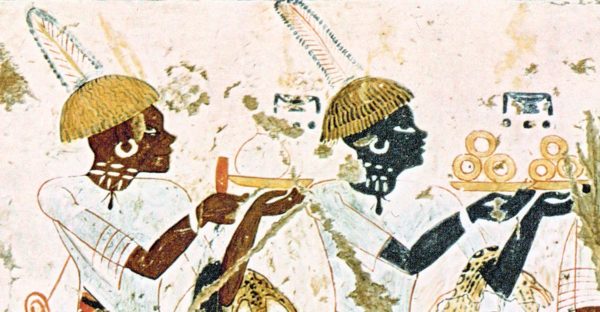
 

huy-kushite-gold

Nubia: Land of Great Natural Wealth, Envied by the World

The most incredible find was made almost 200 years ago in a pyramid near Meroë. An Italian physician and tomb robber known as Ferlini accompanied an Ottoman invasion of Sudan in 1821 and discovered exquisite gold amulets, signet rings and necklaces by blasting open the pyramid of Queen Amanishakheto, one of Nubia’s most powerful rulers. Ferlini tried to sell the treasure when he returned to Europe. But collectors would not believe such treasure could come from Black Africa. Nubia was also the gateway through which luxury products like incense, ivory and ebony traveled from their source in sub-Saharan Africa to the civilizations of Egypt and the Mediterranean.
 

Democracy needs journalism it can trust.

This election season, the stakes are higher than usual — and so is the pressure on newsrooms to soften their coverage, stay quiet, or just disappear. Independent reporting, the kind that answers to readers instead of advertisers or political pressure, matters more in a moment like this, not less.

For over 14 years, Atlanta Black Star has stayed independent and reader-funded. We have no corporate owner and no shareholders telling us what to cover or how to cover it. That independence is also our biggest vulnerability: nothing protects it except readers choosing to fund it directly.

Newspaper ad revenue has fallen more than 80% since 2005, and local newsrooms are closing at a rate of roughly two a week nationwide. When outlets go under in a moment like this, it's rarely the independent, reader-funded ones that get to stick around.

We know a request for support isn't why you came here. But without readers choosing to fund this work directly, the depth of reporting we can do at home and abroad shrinks along with everyone else's. If you're not in a position to give, that doesn't change how much we value you as a reader.

If you are able to, a recurring contribution does more for us than a single one-time gift, because it lets us plan the next investigation instead of just the next invoice. It takes about 30 seconds, no long form, no account. Thank you for continuing to support independent journalism and freedom of the press.

Back to top