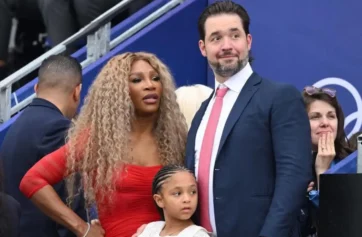
Athletes took to Twitter to express their dismay at the Ferguson grand jury’s decision to not indict officer Darren Wilson in the killing of unarmed teenager Michael Brown.
Magic Johnson: “I am very disappointed with decision in the Mike Brown case in Ferguson, MO. . . My thoughts & prayers are with the Brown family and the people of Ferguson. . . We must work together to stop the unnecessary loss of young men of color. Justice was not served in Ferguson.”
Serena Williams: “Wow. Just wow. Shameful. What will it take???
Detroit Lion Reggie Bush: “So this is what justice looks like huh! SMH. . . Same story different day! History is repeating itself! When is enough enough? How many more have to suffer? When does real change happen?”
All those expressions are likely sincere and heart-felt. But now what? What do athletes do to make a difference? The head-shaking and dismay is warranted, but now comes the time to galvanize.
Celebrities and athletes are the most recognized people in the world. They also are the most listened-to. The world is their audience every day. This is their time to say something.
Trayvon Martin sparked the Miami Heat to take a team photo in hoodies as a show of unification and support of the family. Nice. When Donald Sterling’s vile, racist rant was made public, the Los Angeles Clippers wore their warm up jerseys inside-out and a few teams did also in rebuke of the former owner. Nice.
But nice is not good enough anymore. Hasn’t been for a long time, but definitely not now.
Michael Brown had no gun, was unable to defend himself against an officer of the law and shot down in the middle of the street. . . and no one is accountable for this?
The wealth and notoriety that come with today’s athletic success have made athletes pawns in a growing culture of hate against Black men. The big-time stars are financially secure; they cannot use the excuse of fearing to lose money. They have hundred-million-dollar contracts.
They are the ones who need to be at a microphone in their city—Kobe Bryant, LeBron James, Michael Jordan, Colin Kaepernick, Floyd Mayweather, Magic Johnson, Justin Upton, Charles Barkley, Shaquille O’Neal, Serena Williams, Tiger Woods and on and on—demanding change, leading protests, speaking on behalf of the disenfranchised.
The “I’m just an athlete” rhetoric does not cut it anymore. Athletes’ voices for change can be the loudest in the world. Consider how they are pitchmen and women for dozens of companies that believe their support will lead people to their product—that speaks to the influence they have.
So, if they have that kind of power in the commercial world, why wouldn’t they in helping reshape a world that revolves around white supremacy?
They would, if only they had the courage of Muhammad Ali or Jim Brown or Bill Russell or John Carlos and Tommie Smith—star athletes of the 1960s who were not afraid of losing money or white corporate friends. They lived in the world and saw the world for what it was: a place that needed change.
The world needs change now.
This is powerful from Dr. Harry Edwards, a Black sports psychologist who has worked for years with the San Francisco 49ers and other teams and who was the engineer behind Carlos and Smith’s “Black Power” gloved fist protest at the 1968 Olympics:
“Today’s black athlete is very different. Their identity is different — they live in a rich, largely white world, a world where black individuality is tolerated so long as it is without reference to the black community. If you asked them about the history of the black athlete, many couldn’t tell you much. They don’t find that history relevant to their world. Some even get angry when you ask them about it. One up-and-coming NBA star was asked about Oscar Robertson and he said, ‘Don’t know, don’t care, and don’t take me there.’ They don’t care about whose shoulders they stand on. They have no idea about who set the table at which they are feasting. And the worse part about it is not that they are ignorant of this history, but they are militantly ignorant. The sad part about it is that when people forget how things came about, they are almost certainly doomed to see them go. And I think that is where this generation of black athletes may be headed in sports.”
Know why this is so powerful, beyond the content? He said it to ColorLines, News For Action in 1998. Yes, 16 years ago. . . and the words still ring true today.
Posting discontented messages on Twitter hardly is enough. Create an organization, in conjunction with the leagues and player associations. Call it “Black Athletes For Social Change.”
The NAACP and other organizations have lost their zing. There is an opening. More important, there is a need. Posting on Twitter ain’t gonna get it.