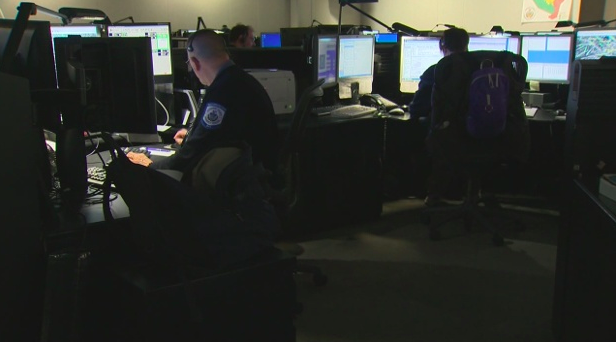
Allegheny County 911 Call Center
Three women of color have filed lawsuits against the Allegheny County Pennsylvania 911 call center, claiming that while working there they were subjected to racial slurs and forced to do certain jobs because of their race.
The three women worked as dispatchers at the call center and say that Black workers were made to take all of the inner city calls because they knew how to “speak ghetto,” according to Fox News.
Two of the Allegheny County dispatchers are Black and one is Hispanic.
Ruby Helvy, who was hired in 2005, claims that her boss disciplined her more heavily than other dispatchers; she was suspended without pay last month. She says that she was suspended for a day for not being at her desk for and missing a call in December 2012 but when white workers made similar mistakes they weren’t punished. She was also suspended twice for three days each early last year “due to general attitude, neglect of duty and politeness” and then for a week in March 2013 for “insufficient effort and inattention to detail,” according to her lawsuit.
Kelli Rodriguez, a Hispanic woman, says she was subjected to unwarranted sexual comments from a white male supervisor.
The third dispatcher in question, Dapree Thompson of Penn Hills, says that she has been a dispatcher for 10 years and though she remains employed, she is suing because she feels she’s been unfairly subjected to more severe discipline than white workers and was forced to work overtime on occasions where others were allowed to go home.
Thompson also says that in 2011 emergency crews in the field called her a racial slur during a call. When she informed her supervisors they promised to look into the matter but never did. Since then, Thompson feels it’s only gotten worse and she was suspended for five days for an argument with a white employee who wasn’t suspended.
All three women are seeking damages for lost wages.


