Rekia Boyd
While Chicago has been portrayed as a city that has been overwhelmed with violence in the Black community, a group of protesters gathered in front of the Chicago police headquarters on Wednesday night to charge that in fact the Chicago police department is systematically targeting African Americans in the city, leaving far too many dead at the hands of Chicago police officers.
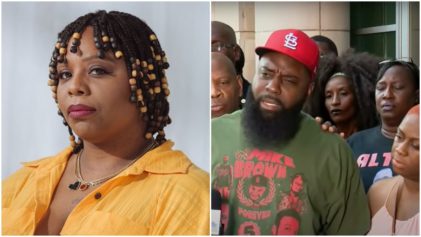
A group of noteworthy attendees at the rally was the families of young people killed by the police, who publicly recounted the circumstances of their deaths and described how they have been trying to get answers and justice for their family members.
One of the organizers was Jason Ware, with works with an organization called We Charge Genocide in Chicago. Ware accused the department of systemic racial profiling of black and Hispanic youth. Ware pointed out that much national attention has rightly been directed at Ferguson, Missouri, after the police killing of 18-year-old Michael Brown, but he said the police in Chicago were also guilty of murdering Black youths.
“The Chicago police department has a disregard for black life and officers have impunity for the crimes they commit against black residents,” he told the Guardian in an email after the rally.
The date chosen for the rally wasn’t random: November 5 was the birthday of Rekia Boyd, who was killed by an off-duty police officer two years ago while she was hanging out with friends at Chicago’s Douglas Park at around 1:00 a.m. on March 21, 2012. Boyd, who would have turned 25 on Wednesday, was an innocent bystander when Detective Dante Servin, responding to a disturbance call, arrived on the scene, though he was off-duty.
Servin exchanged words with Antonio Cross, who was also in the park. After turning away, Servin, who was in his car, claims he saw Cross pull out a gun—but it was actually Cross’s cell phone.
Servin fired five shots “blindly” over his shoulder from his unregistered gun, hitting Cross in his thumb and striking Boyd in the head. She died the next day at Mount Sinai Hospital.
“lt’s a sad day when charges are warranted against a police officer, but we feel very strongly that in this particular case Ms. Rekia Boyd lost her life for no reason and that this defendant’s actions were reckless in shooting in that alleyway that was occupied,” the state’s attorney, Anita Alvarez, said of the case.
The city settled a $4.5 million wrongful death lawsuit with Boyd’s family this past March. When Servin was charged with involuntary manslaughter, it was the first time in more than 15 years a Chicago police officer was criminally charged. But many in the Black community wanted him charged with second-degree murder since he fired into a crowd over his shoulder.
Servin’s trial starts in December and is sure to be a tense and closely watched proceeding.
At Wednesday’s rally, demonstrators led a list of demands in front of local news TV cameras.
Among them was a demand that Cook County state’s attorney Alvarez investigate the department’s “disproportionate use of deadly force” against residents in predominantly black neighborhoods of Chicago.
“We need more transparency from our local police department,” William Calloway, one of the organizers, said, according to The Guardian. “The police department needs to be more accountable to the community.”
Calloway said tensions between the police and Black communities were high across the country, but especially so in Chicago.
“There are certain black neighborhoods in Chicago that are targeted by police,” he said. “And there’s a lot of frustration starting to boil inside of these neighborhoods because we are not receiving justice for the wrongdoings of the police force.”