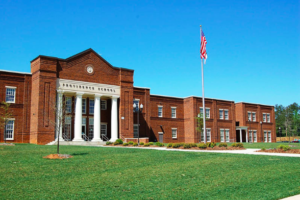
Providence School in West Huntsville
The Huntsville City school system in Alabama recently released records showing the system expelled 305 students last year. Of those, 238 were Black. Coincidence? Probably not.
The Alabama school district was reportedly paying an ex-FBI agent $157,190 a year to spy on its students’ Instagram, Facebook and Twitter accounts. The premise was that this detective would be able to prevent tragedies like mass shootings and other horrific behavior. It turns out that the majority of the children targeted were Black.
According to Alabama.com, the school system paid Chris McRae to monitor all 24,000 of its students this past year through a new program called SAFe, Students Against Fear. Students could be flagged by students and teachers in SAFe. Six hundred students were chosen and McRae searched their social media accounts “for images of guns or gang signs.”
With 238 of the 305 expelled children identified as Black, that means a startling 78 percent of the expulsions involved Black children—in a school system that is just 40 percent Black.
Fourteen of the expulsions came directly through SAFe and the Facebook and Instagram searches. Of those 14 expulsions, 12 were Black, which means 86 percent of SAFe expulsions were Black students.
Madison County Commissioner Bob Harrison suggested to Alabama.com that the numbers indicate the system is targeting and criminalizing the social media activities of Black children.
He said it was a system “that is effectively targeting or profiling Black children in terms of behavior and behavioral issues,” said Harrison.
But the only Black member of the city school board in Huntsville, Laurie McCaulley believes that expulsions are caused by serious offenses, involving weapons, drugs or sex, and not race.
“These numbers tell me that I have kids with some major issues,” said McCaulley. “What I think the board is doing is trying to provide a safe environment for all children.”