7 Items Exposing Hollywood’s Obsession with Promoting Light-Skinned Black Characters

Hollywood has made little progress in the last century when it comes to colorism. Both dark- and light-skinned Blacks continue to be cast in roles that perpetuate color hierarchy or white supremacy in our communities.

Casting directors are in the habit of only — or mostly — hiring non-European actors and actresses with lighter skin tones because they assume that they will be more attractive to their largely ethnic-European audiences. Dark-skinned Black female actresses are especially negatively impacted by this.

Here are seven ways that Hollywood’s obsession with promoting light skin over dark skin is exposed.
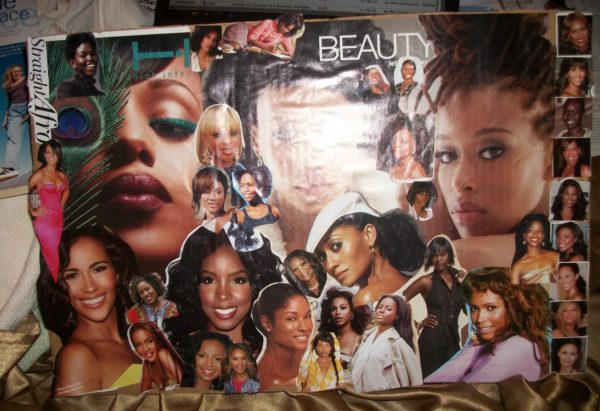
 

black beauty collage

In Hollywood today, the biggest Black entertainers right now could probably all pass a brown paper bag test (Beyoncé, Rihanna, Halle Berry, Mariah Carey, Tyra Banks, Alicia Keys.) The best roles have mostly gone to lighter-skinned or multiracial actresses who fall within Eurocentric standards of beauty, including Berry, Dorothy Dandridge, Lena Horne, Diahann Carroll, Pam Grier, Shari Belafonte, Rae Dawn Chong, Cynda Williams, Rosario Dawson, Thandie Newton, Zoe Saldana, Rashida Jones and Paula Patton.

 

race lupita 1Only One Lupita

There has never been a Black actress of Lupita Nyong’o’s ebony skin tone to ascend to Hollywood’s A-list status.


Democracy needs journalism it can trust.

This election season, the stakes are higher than usual — and so is the pressure on newsrooms to soften their coverage, stay quiet, or just disappear. Independent reporting, the kind that answers to readers instead of advertisers or political pressure, matters more in a moment like this, not less.

For over 14 years, Atlanta Black Star has stayed independent and reader-funded. We have no corporate owner and no shareholders telling us what to cover or how to cover it. That independence is also our biggest vulnerability: nothing protects it except readers choosing to fund it directly.

Newspaper ad revenue has fallen more than 80% since 2005, and local newsrooms are closing at a rate of roughly two a week nationwide. When outlets go under in a moment like this, it's rarely the independent, reader-funded ones that get to stick around.

We know a request for support isn't why you came here. But without readers choosing to fund this work directly, the depth of reporting we can do at home and abroad shrinks along with everyone else's. If you're not in a position to give, that doesn't change how much we value you as a reader.

If you are able to, a recurring contribution does more for us than a single one-time gift, because it lets us plan the next investigation instead of just the next invoice. It takes about 30 seconds, no long form, no account. Thank you for continuing to support independent journalism and freedom of the press.

Back to top