The international Convention on the Prevention and Punishment of the Crime of Genocide defines genocide “as any of the following acts committed with intent to destroy, in whole or in part, a national, ethnical, racial or religious group:
(a) Killing members of the group;
(b) Causing serious bodily or mental harm to members of the group;
(c) Deliberately inflicting on the group conditions of life calculated to bring about its physical
destruction in whole or in part;
(d) Imposing measures intended to prevent births within the group;
(e) Forcibly transferring children of the group to another group.”
Gregory Stanton, research professor in genocide studies and prevention at George Mason University, studied the genocide in Cambodia for the U.S. State Department. After observing the Rwanda genocide unfold in the same way as the one in Cambodia, Stanton identified the eight steps that take place during a genocide.
Here are the eight steps that may be used to determine if Black people in America have or are currently experiencing genocide.

Classification
Classification references the division into “us” and “them.” The “one drop” rule used for Jim Crow in America or the apartheid racial classification laws in South Africa are examples of this. While it is not a sign that genocide is on the way, genocide would be impossible without an established classification of the “in group” and “out group.”
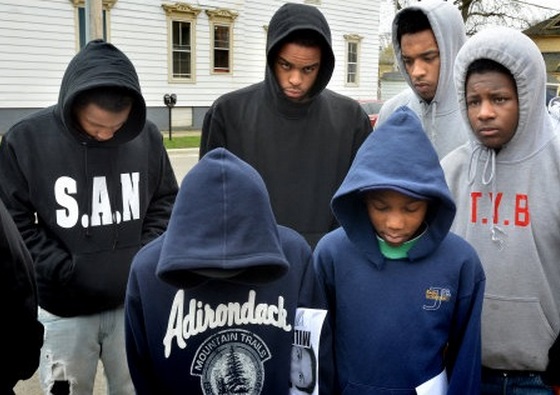
Symbolization
Symbolization follows when words or symbols are applied to the classifications, such as skin color, ID cards or maybe even fashion. Genocidal groups or governments often require members of a targeted group to wear an identifying symbol or distinctive clothing — for example, the yellow star for Jews.