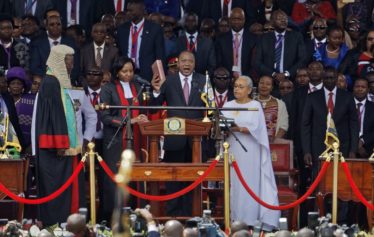
In an unusual move, Kenyan President Uhuru Kenyatta told his nation Monday that he would temporarily step down as president so that he could attend a hearing at the International Criminal Court (ICC) in the Hague as a private citizen and not the leader of Kenya.
In doing so, Kenyatta would make Deputy President William Ruto the temporary president, invoking a never-before-used article of the Kenyan constitution that says the deputy can fill in when the president is absent, temporarily incapacitated or during any other period the president decides.
Both Kenyatta and his deputy Ruto have been accused by the ICC of orchestrating clashes in the ethnic violence that erupted after disputed elections in 2007. That violence resulted in more than 1,100 deaths and caused 350,000 others to flee their homes. It also slowed the growth of East Africa’s largest economy.
Both Kenyatta, the son of Kenya’s founding president, and Ruto deny any wrongdoing.
By stepping down, Kenyatta can follow the court’s order that he attend, but not be the first president to sit before the court.
Kenyatta explained Monday that he did not want Kenyan citizens to be put on trial in another jurisdiction.
“Therefore, let it not be said that I am attending the status conference as the president of Kenya,” he said, according to the Daily Nation newspaper.
“My accusers both domestic and foreign have painted a nefarious image of most African leaders as embodiments of corruption and impunity,” he said. “Nothing in my position or my deeds as president warrants my being in court. I expected the matter to be dropped for lack of evidence. Instead, the prosecutor asked for an extension and blamed the government of not co-operating.”
Kenyatta could have faced an international arrest warrant and international condemnation or economic sanctions against Kenya if he had refused to go, as some members of his political party have urged.