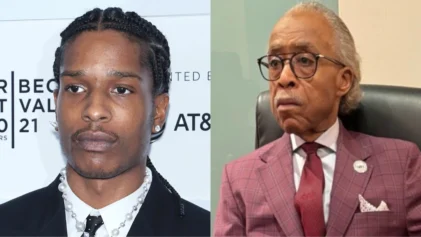
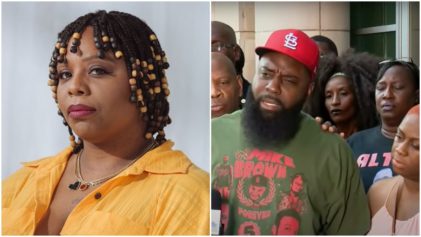
Among the guests expected at Michael Brown’s funeral in North St. Louis today are the parents of Trayvon Martin, illustrating the powerful link that connects these two Black boys whose slayings have galvanized a nation.
But while the many similarities between the two cases solidify the bond between the boys and their families, they also highlight something else: how commonplace such killings seem to be.
Indeed, the Malcolm X Grassroots Movement issued an oft-cited report last year that concluded police officers, security guards, or self-appointed vigilantes killed at least 313 African-Americans in 2012, a rate of one every 28 hours.
After their killings, attempts were made to place blame on both Martin and Brown—George Zimmerman claimed that Martin was an aggressor, while Officer Darren Wilson has told authorities that Brown attacked him before he opened fire.
In addition, reports leaked out attempting to impugn the character of both boys—pictures of Martin tried to imply he was a thug, while Brown was implicated in shoplifting at a nearby convenience store.
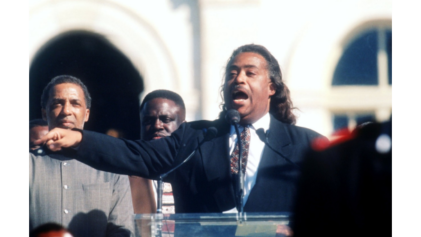
As 18-year-old Brown is eulogized today at Friendly Temple Church in North St. Louis by Rev. Al Sharpton, there is also a stark difference between the aftermath of the Martin and Brown cases. While there was online outrage after Martin’s death and law enforcement’s unwillingness to arrest Zimmerman in the wake of the February 2012 killing, this time the outrage spilled out onto the streets of Ferguson with days and nights of protests and even rioting.
This was probably largely due to where the killings occurred: Martin was killed at 7 p.m. in a fairly isolated subdivision in Sanford, Florida, while Brown was shot down in the middle of a busy street in the middle of the day.
There were many witnesses to Brown’s slaying by Wilson, adding fuel to the community’s ire. In addition, Brown’s body lay in the street for hours, in what seemed to be an incomprehensible display of disrespect by the Ferguson Police Department.
Thousands of mourners are expected to join the families at Friendly Temple, while millions surely will be watching at home and on the Internet. The White House reportedly sent three staffers—though the absence of President Obama will surely be noted by many who have been calling out for a more rigorous response from him.
Last night, Michael Brown Sr. begged the community to halt the protests while his son is lain to rest.
“Tomorrow, all I want is peace while my son’s being laid to rest,” Brown said, with Sharpton at his side. “I really don’t want protesters tomorrow. Our son needs to have a moment of silence for tomorrow. Please take a day of silence while we can lay our son to rest. Please, that’s all I ask.”
While Brown is buried, the nation is still awaiting word from a St. Louis grand jury on whether Wilson will be charged with murder in Brown’s death. In addition, the Justice Department is considering whether the killing was a violation of Brown’s civil rights.