
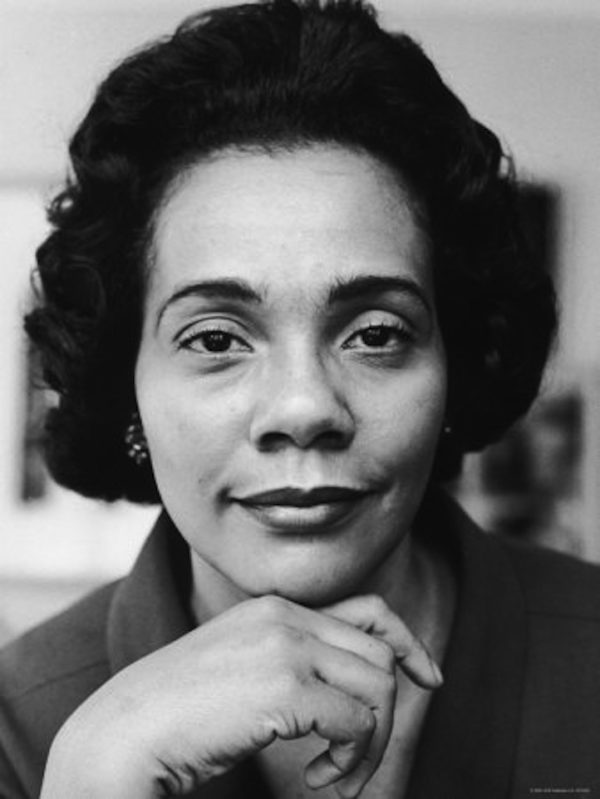
 Coretta Scott King (April 27, 1927 – Jan. 30, 2006)
Overlooked Civil Rights Leaders
During slavery, Reconstruction and the Civil Rights Movement, Black women endured segregation, discrimination, white terrorism and verbal abuse.
Women were just as involved in the Civil Rights Movement as men. However, their contributions are often overlooked.
Civil Rights scholars acknowledge that women were the backbone of the movement, some arguing that women laid the foundation for the movement.
As an undergraduate at Antioch College in Yellow Springs, Ohio, King took an active interest in the Civil Rights Movement and joined the Antioch chapter of the NAACP and her college’s Race Relations and Civil Liberties committees.
She worked side by side with her husband, the Rev. Martin Luther King Jr. She took part in the Montgomery Bus Boycott and worked to pass the Civil Rights Act of 1964.
She used her singing talent to perform and raise money at freedom concerts to tell the story of the Civil Rights Movement. She became the first woman to deliver the Class Day address at Harvard.
King participated in a Women Strike for Peace protest in January 1968, in Washington, D.C., with more than 5,000 women.
She also was behind the 15-year fight to have her husband’s birthday instituted as a national holiday. In 1983, President Ronald Regan signed Martin Luther King Day into law.
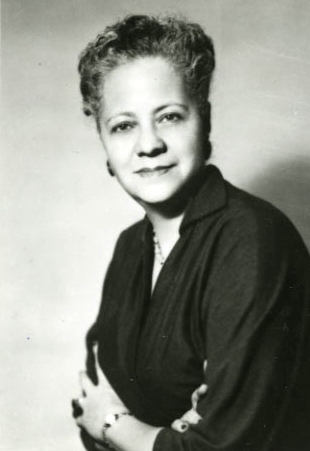 Anna Arnold Hedgeman (July 5, 1899 – Jan. 17, 1990)
Her career spanned more than six decades as an advocate for civil rights. While teaching in Mississippi, she experienced racial segregation and discrimination, which led to her involvement in the Civil Rights Movement.
In 1944, she became the executive secretary of the National Council for a Permanent Fair Employment Practices Commission in Washington, D.C. From 1954-1958, she was the first African-American woman to hold a mayoral cabinet position in New York City.
Hedgeman was also the only woman on the executive committee that organized Martin Luther King Jr.’s famous March on Washington in 1963.
When she realized there were going to be no female speakers at the event, she protested the minimal recognition of women who were civil rights heroes. She persuaded the committee to invite civil rights activist Daisy Bates to speak at the Lincoln Memorial.


