 Dallas County commissioners in Texas accidentally voted in favor of slavery reparations earlier this week and are now admitting they did not read the entire resolution before making the unanimous decision.
According to The Dallas Morning News, Dallas County commissioners made a surprising unanimous vote on a Juneteenth resolution because they assumed they already knew what the resolution stated.
“Juneteenth” is a term given for the 19th of June to commemorate emancipation from slavery in Texas on that day in 1865 and the emancipation of African-Americans in general.
Initially, the Dallas County resolution appeared to be another routine proclamation of June 19.
However, The Guardian reports that the final paragraph of the resolution states that African-Americans should be “satisfied with monetary and substantial reparations.”
After the decision had been made, commissioners complained that they had not received copies of the resolution prior to the vote.
They also argued that slavery reparations were not mentioned anywhere in the meeting’s agenda.
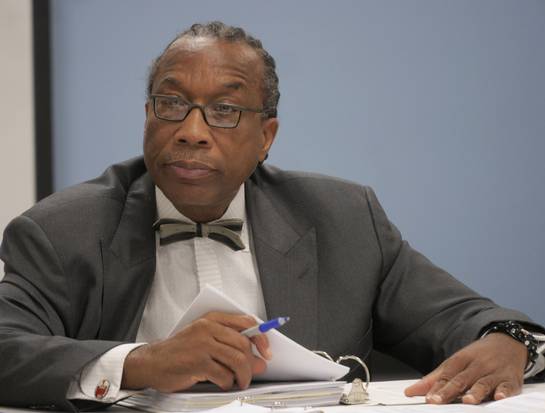
The resolution was, however, read to the commissioners by member John Wiley Price who also introduced the non-binding legislation.
Price is currently the only Black Dallas County commissioner.
Because the resolution is indeed non-binding, reparations for slavery will not be enforced, however, one of the commissioners encouraged the staff to be more careful next time.
“I want to encourage staff to make sure that all of the commissioners have the opportunity to actually read what they are voting on before that vote in the future,” county judge Clay Jenkins said.
He also said that he has no intentions to change his vote on the resolution.
“I am leaving my vote the way it is,” Jenkins said. “This is the body’s expression of support for unity towards people, a recognition of Juneteenth.”
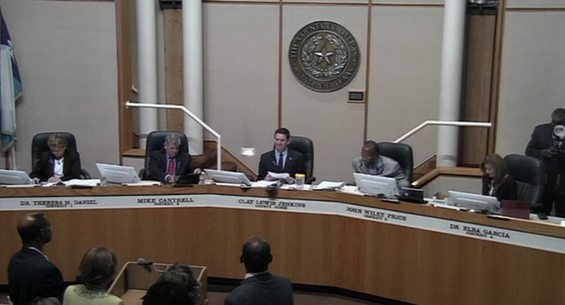 Other commissioners agreed to keep their votes in tact because they still viewed the resolution as being strictly ceremonial.
Commissioner Mike Cantrell, on the other hand, changed his vote to “abstain.”
“I do not support reparations, and I do not support one of the statements he made, which was that the United States was derelict in his promise to African- Americans,” Cantrell told the Dallas Observer. “I think Commissioner Price went too far, and I can’t support that.”
Cantrell also responded to reports that other commissioners were busy on their computers or otherwise uninterested when Price was reading the resolution.
He told Raw Story that he was actually looking for a copy of the resolution because something didn’t seem right.
“As Commissioner Price was reading this I was trying to find a copy because it sounded like he was going way over what he typically does,” Cantrell said.
Meanwhile, Price still stands behind the decision to approve slavery reparations.
“We are the only people who haven’t been compensated,” Price said.
In the resolution he noted that Native Americans and Japanese-Americans have been given compensation for the cruel treatment of their ancestors and he believes African-Americans deserve the same.