In perhaps the most stinging rebuke yet to Los Angeles Clippers owner Donald Sterling, the NBA yesterday installed a Black man — former Time Warner CEO Richard Parsons — as interim chief executive of the team.
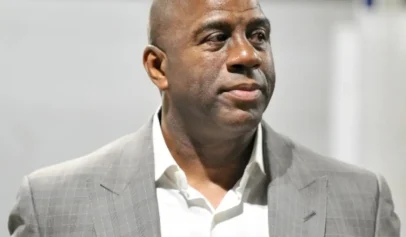
The league’s move came as NBA legend Magic Johnson, who has expressed an interest in buying the Clippers, told USA Today that none of the current Clippers players would play for the team if Shelly Sterling, the owner’s estranged wife, retains her 50 percent ownership stake.
“Those guys are not going to play for anybody (named) Sterling,” Johnson said at the Omni Dallas Hotel. “It’s just how it is. It’s hard to separate the two. … It’s going to be hard for them to sell that to the fans and definitely to the players.”
While saying she wanted to retain ownership, Shelly Sterling has said she would be a passive owner, uninvolved in the day-to-day operations of the team.
But according to Johnson, that didn’t matter, considering her history.
“When they accused them of (being) slumlords, that was both, it wasn’t one person,” Johnson said. “It was both of them. … They will never recover from this. All the sponsors pulling out, they will pull out for good if she is owning it. It’s not going to be the same.”
As for his interest in buying the team, Johnson said he wanted to wait until the team is officially up for sale before he states his interest level.
“First of all, we have to all remember that that is a long way away,” Johnson said. “The board of governors first has to vote him out. Donald Sterling is going to fight it. You know that. It is going to be a long time. I have other things to do before I just say my level of interest. The team has to be up for sale. And I think that is going to be eight months to a year. Once it’s official, that it’s really up for sale, we’ll take a look at it.”
The NBA took the next step toward terminating Sterling’s ownership when a committee of 10 fellow owners or their representatives voted unanimously last week to move ahead “as expeditiously as possible.”
Parsons, 66, is currently a senior consultant at the investment firm Providence Equity Partners. He is a one-time member of President Obama’s economic advisory team, and has long been considered one of the most prominent African-American business leaders in the country, formerly serving as president of Time Warner in 1995, and chairman and CEO from 2002 until 2008. He was later appointed chairman of Citigroup until stepping down from that post in 2012.
“I believe the hiring of Dick Parsons will bring extraordinary leadership and immediate stability to the Clippers organization,” NBA Commissioner Adam Silver said.
Parsons actually played college basketball at the University of Hawaii before going on to earn a law degree.
“Like most Americans, I have been deeply troubled by the pain the Clippers team, fans and partners have endured,” Parsons said in his own statement in which he praised the coach, players and staff for showing “great strength of character during a time of adversity.”
Meanwhile, another audio recording of Donald Sterling has surfaced on RadarOnline in which he purportedly explains why he told his friend V. Stiviano not to bring Black people to his games: He was jealous that she was with Black men.
“The girl is Black. I like her. I’m jealous that she’s with other Black guys. I want her. So what the hell, can I in private tell her, you know, ‘I don’t want you to be with anybody?”’ the man purported to be Sterling says in the new tape, according to RadarOnline.
“I’m trying to have sex with her. I’m trying to play with her,” the man also says. “You know, if you (are trying) to have sex with a girl and you’re talking with her privately, you don’t think anybody’s there. You may say anything in the world. What difference does it make?
“Then if the girl tapes it and releases it, my God, it’s awful.”