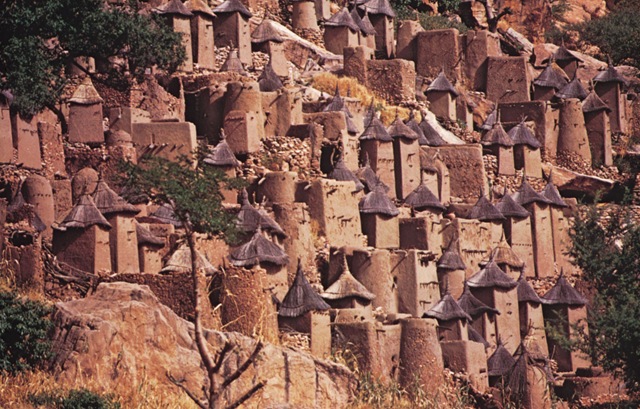
Photo: mindhobby.com
Villages
In the Mopti region of Mali rests the cliff of Bandiagara, informally known as the land of the Dogon people. This area is heavily steeped in rich cultural traditions of the people known for their mask dances and wooden sculptures.
This unique sandstone landscape cradles nearly 300 villages comprised of granaries, houses, sanctuaries, community meeting spaces and altars; in that respect, Dogon villages are like any collection of people, dwellings and communal edifices.
What separates Dogon villages from any other, is the intent of certain spaces to be occupied as a means of deflating conflict. For instance, men and women maintain separate spaces outside of the shared home to house their belongings and food, to hold meetings, and to have time separate from their mate.
Additionally, the Toguna, which is solely for males, is used for major decision making and to discuss affairs. Its architecture is such that one cannot stand upright. This is to avoid physical violence if debates within the Toguna become heated.