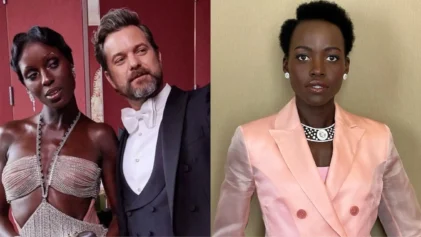
 On Sunday’s canvas an image was painted in the minds of millions. We watched as a poised woman with chocolate skin, evidence of her Kenyan descent, sat in the audience of the 86th Academy Awards ceremony anticipating the calling of her own name.
The world watched as the Gabriel of the evening trumpeted, “And the Oscar goes to Lupita Nyong’o.”
Lupita’s win for her portrayal of Patsey in the Steve McQueen-directed “12 Years a Slave” is undoubtedly cause for collective celebration; but is it wise for us to attend this party without first reading the invitation?
When examining the picture that has been painted for us, we have to get close to see the distortions in every stroke. Simply put, the moment was indeed beautiful, but the ugly truth is, our wins are still rare.
Television entertainer Ellen DeGeneres hosted this year’s ceremony, punctuating the evening with humor. DeGeneres joked that the night could end one of two ways, “Possibility No. 1: “12 Years a Slave” wins best picture; possibility No. 2: You’re all racists.”
Her quip is heavy with uncomfortable truths.
Lupita is one of only six women of color to win in the supporting role category since the inaugural ceremony of the Academy of Motion Picture Arts and Sciences in 1929, and one of only 14 people of color to earn an Oscar. She is the first person who identifies as African to be nominated and win the prestigious award.
Why is that?
Iconic filmmaker Spike Lee suggested in a BET interview last year, that Blacks are given a standing invitation to a party that we are not always welcome to attend.
“One year, it’s, ‘We’ve arrived! But then, a nine-year drought,” he said.
Our presence at the Oscars has been ambiguous since actress Hattie McDaniel sat in the colored section of the segregated ceremony in 1940 to receive the statue for her role as Mammy in the classic film, Gone With the Wind.
While we are now able to sit amongst our pale-skinned peers at the ceremony, and are even represented by the president of the Academy, Cheryl Boone Isaacs, the first Black woman to hold the position, the demographics of the Academy are not diverse. The numbers mirror nearly every major institution or decision-making entity in our society; 93 percent white, 76 percent male, and an average age of 63.
These men seek our attention for their recognition of films like “Precious,” “The Help” and “12 Years a Slave,” each extremely important work, but not wholly representative of the Black community.
For those of us who are able to constructively agitate every systematic organism of oppression, we have to ask, “What do these wins really mean in the grand scheme of things?”
By Barbara Shae Jackson