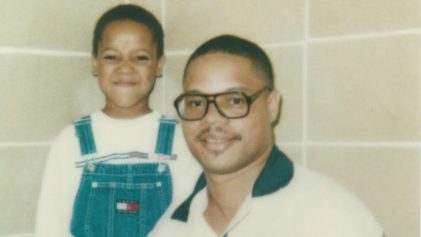
The state of Missouri is having difficulty carrying out the planned execution of 47-year-old Michael Taylor, scheduled for Feb. 26, because a pharmacy in Oklahoma called the Apothecary Shoppe refuses to provide Missouri a made-to-order drug for the execution.
The Apothecary Shoppe in Tulsa will not prepare nor provide pentobarbital or any other drug for use in Taylor’s execution, according to court papers filed yesterday. The documents seek to have the judge dismiss the suit that Taylor’s lawyers filed against the pharmacy, looking to stop the pharmacy from providing the execution drug. A hearing is scheduled for today.
Taylor was convicted of raping and murdering 15-year-old Ann Harrison after abducting her from a school bus stop in Raytown, Mo., on March 22, 1989. He was aided by another man, Roderick Nunley, who is also currently on Missouri’s death row for the same crime. They two men admitted they were under the influence of crack cocaine at the time of the crime.
Taylor was originally scheduled to be executed Feb. 1, 2006, but an appeals court stayed the execution on the grounds that lethal injection in Taylor’s case could be cruel and unusual punishment. When the U.S. Supreme Court rejected Missouri’s request to have the execution stayed, Justice Samuel Alito, in his first official act on the Supreme Court, made headlines because he did not vote with the court’s conservative wing, Justices Antonin Scalia, Clarence Thomas and Chief Justice John Roberts.
Taylor’s attorney, Matt Hellman, said the pharmacy acknowledged it has not already provided any drug to the Missouri Department of Corrections for the execution. Last week when Missouri Gov. Jay Nixon indicated that the state has drugs to carry out Taylor’s execution, the governor did not answer directly when asked whether an execution drug was available.
“In order to complete that ultimate responsibility, that’s necessary. The Department of Corrections is prepared to carry out that execution,” Nixon said.
Taylor sued the pharmacy, alleging that Missouri turned to the Apothecary Shoppe to supply compounded pentobarbital because the only licensed manufacturer of the drug, Illinois-based Akorn Inc., refuses to provide it for lethal injections. Akorn agreed to that condition when it bought exclusive rights to the drug in January 2012 from a Danish company that produced it under the trade name Nembutal.
According to Taylor’s suit, several recent executions in which compounded pentobarbital was used showed it would likely cause him “severe, unnecessary, lingering and ultimately inhumane pain.”
For instance, within 20 seconds of receiving a lethal injection on Jan. 9 at the Oklahoma State Penitentiary, 38-year-old Michael Lee Wilson said, “I feel my whole body burning.” On Oct. 15, 2012, in the execution in South Dakota of Eric Robert, 50, Robert cleared his throat, gasped for air and then snored after receiving the lethal injection, which included compounded pentobarbital. According to the lawsuit, his skin turned a purplish hue, and his heart continued to beat for 10 minutes after he stopped breathing. It took 20 minutes for authorities to finally declare Robert dead.
“These events are consistent with receipt of a contaminated or subpotent compounded drug,” the lawsuit says.
Taylor’s lawsuit says the pharmacy is not registered as a drug manufacturer with the U.S. Food and Drug Administration and alleges that it violates federal law each time it delivers the drug across state lines to Missouri corrections officials.