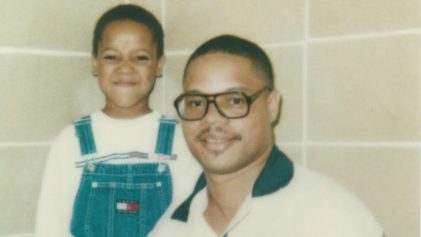
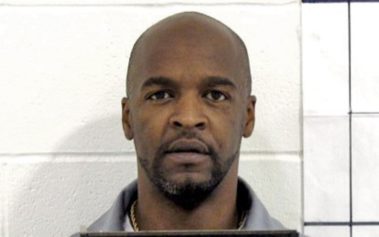
McCarthy
Shortly after 6 p.m. tonight, Kimberly McCarthy will receive a lethal injection of pentobarbital in Huntsville, Texas, and she will have the dubious distinction of being the 500th inmate put to death in that state since the Supreme Court reinstated the death penalty in 1976.
Unless she gets a last-minute reprieve, McCarthy, the 52-year-old former wife of a Black Panther, will be killed for the murder of a 70-year-old Dallas County woman during a 1997 robbery.
Texas kills an average of one inmate every three weeks, a pace that makes it by far the most active state in the killing business. Of the 34 states that have the death penalty on the books, Texas has killed almost five times more people than the runner-up, Virginia, which has had 110 executions since the death penalty was federally reinstated in 1976. Next is Oklahoma with 104 and Florida with 77, according to the Death Penalty Information Center, a Washington-based group that advocates against the death penalty.
According to an editorial in the New York Times, “In Texas, as well as other states, a black person who murders a white person is more likely to receive the death penalty than when the victim is black.”
One of the reasons is the consistent use of peremptory challenges to keep blacks off juries—a violation of the Supreme Court ruling against purposeful exclusion of minorities from a jury when a minority is the defendant.
The Dallas Morning News examined the use of peremptory challenges in Dallas County in 1986 and again in 2005, and found that county prosecutors were still trying to keep almost all blacks off juries.
“The paper found that in a sample of 108 cases three years before – the year Ms. McCarthy was tried, convicted and sentenced – county prosecutors ‘excluded eligible blacks from juries at more than twice the rate they rejected eligible whites’ and ‘being black was the most important personal trait affecting which jurors prosecutors rejected,'” according to the Times.
Kristin Houlé, executive director of the Texas Coalition to Abolish the Death Penalty, said there have been 12 death row exonerations in Texas since 1976 and at least five executed offenders were “strongly suspected” of being innocent.
“The system is rife with doubt and failures,” Houlé told USA Today. “This is a punishment that can’t be reversed.”
But Dudley Sharp, a Houston-based death penalty and victims advocate, said the death penalty deters some segment of the criminal population and, more importantly, brings justice to the families of victims.
“Executed murderers don’t harm or murder again,” he told USA Today.
While Hollywood has led us to believe that death row inmates dine on a sumptuous feast before dying, John Hurt, a spokesman with the Texas Department of Criminal Justice, which oversees executions, said in Texas offenders are given whatever the prison kitchen cooks up as a last meal. He said most of them don’t want to eat anyway.
“Most of them will tell you they don’t have much of an appetite,” he said.