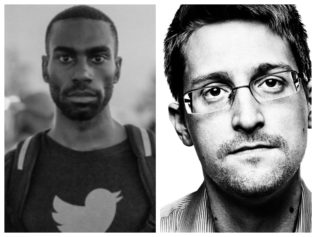
In the eyes of the journalism advocacy group Reporters Without Borders, the press freedoms in the United States got much worse over the past year, thanks to cases like the pursuit of whistleblower Edward Snowden and prosecution of Bradley-Chelsea Manning. The U.S. plummeted to 46th place on the organization’s annual World Press Freedom Index, a spot that puts it behind such nations as Botswana and El Salvador and right ahead of Haiti.
The purpose of the yearly index is to spotlight “the negative impact of conflicts on freedom of information and its protagonists.”
In explaining the precipitous fall of the U.S., Reporters Without Borders said, “Countries that pride themselves on being democracies and respecting the rule of law have not set an example, far from it. Freedom of information is too often sacrificed to an overly broad and abusive interpretation of national security needs, marking a disturbing retreat from democratic practices. Investigative journalism often suffers as a result.”
In addition to the cases of Snowden and Manning, the organization cited the U.S. Justice Department’s seizure of Associated Press phone records without warning in order to identify the source of a CIA leak, as another case that led to the drop.
Other major powers didn’t fare well either, with Russia coming in 148th, China 175th and India 140th.
On China, the organization said, “Despite having an astonishing vital and increasingly militant blogosphere, it continues to censor and jail dissident bloggers and journalists. This new power is also using its economic might to extend its influence over the media in Hong Kong, Macau and Taiwan, compromising their independence.”
It was a good year for journalists in sections of Latin and South America, as violence against journalists, direct censorship and misuse of judicial proceedings were on the decline in Panama (which jumped 25 places to 87th), Dominican Republic (which rose 13 places to 68th), Bolivia (a rise of 16 places to 94th) and Ecuador (rising 25 places to 94th).