5 Inventions By Enslaved Black Men Blocked By U.S. Patent Office

The Patent Act of 1793 and 1836 barred enslaved Africans from obtaining patents because they were not considered citizens.

In 1861, Jefferson Davis, president of the Confederate States of America, enacted a patent law that allowed enslaved Africans to receive patent protection for their inventions, according to Bloomberg.com.

In 1870, the U.S. government passed a patent law giving all American men, including Blacks, the rights to their inventions.
slavery jo

Jo Anderson

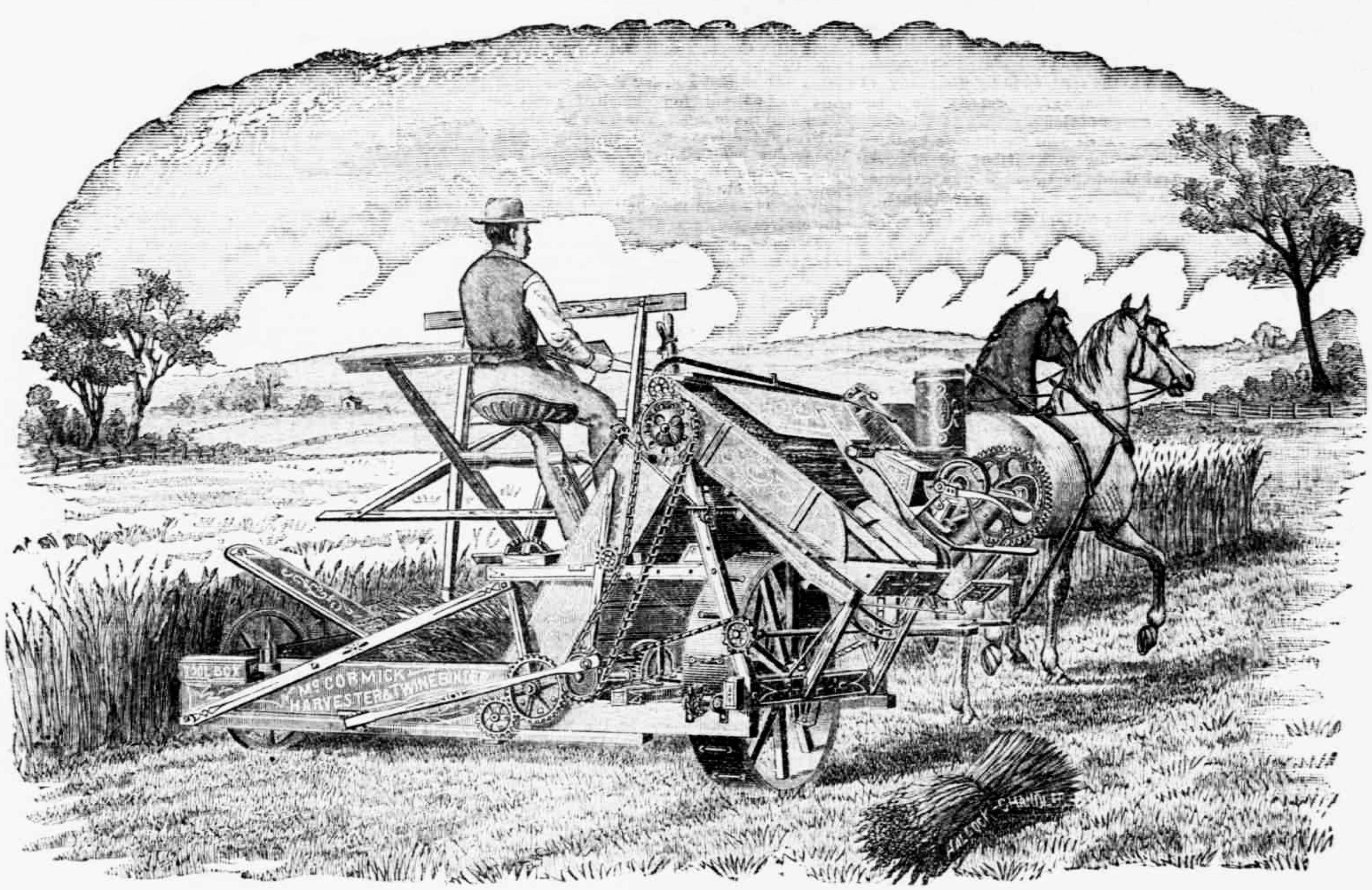
Cyrus McCormick, considered the “Father of Agriculture,” has been widely credited, along with his father Robert McCormick, for revolutionizing the farming industry with the invention of the mechanical reaper. Little is reported about Jo Anderson, the Black man who worked closely with slave-holder McCormick on the machine.

Lester R. Godwin Jr., a retired curator of the McCormick Farm in Augusta and Rockbridge, Va., said that Anderson “has as much to do with the later development of the reaper as Cyrus McCormick.” Godwin would add, “Unfortunately, history likes to put things in neat boxes … and often those who are involved in the creation of something don’t get credit for it.”

McCormick’s grandson also acknowledged the work of Anderson in his 1931 book, “The Century of the Reaper.”

“Of that day in July 1831, when the reaper was first tested before an audience of friends, neighbors and skeptics in the Shenandoah Valley, Jo Anderson was there, the Negro slave who, through the crowded hours of recent weeks, had helped build the reaper.”
Independent journalism still matters.

We hope this story was worth your time. For over 14 years, Atlanta Black Star has stayed Black-owned and independently run. We didn't get here by waiting on ad budgets that were never built to prioritize us. Our readers did that.

Corporate support for Black media has always been thin. Outlets like ours get roughly 1% of the $170 billion spent on U.S. advertising each year, and that margin is shrinking further as advertisers walk back the DEI-linked commitments they made in 2020. That's the backdrop. It's not why we're asking.

The wider picture isn't any steadier. Newspaper ad revenue has fallen more than 80% since 2005, and local newsrooms are closing at a rate of roughly two a week nationwide. When outlets go under, it's rarely the ones built to center a Black perspective from the ground up that get to stick around.

We know a request for support isn't why you came here. But without readers choosing to fund this work directly, the depth of reporting we can do at home and abroad shrinks along with everyone else's. If you're not in a position to give, that doesn't change how much we value you as a reader.

If you are able to, a recurring contribution does more for us than a single one-time gift, because it lets us plan the next investigation instead of just the next invoice. It takes about 30 seconds, no long form, no account. Thank you for continuing to support independent journalism and freedom of the press.

Back to top