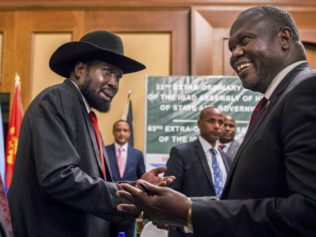
Talks between South Sudan’s government and rebels are due to start soon in Ethiopia, say observers.
However there has been no immediate halt to hostilities, with reports that heavy fighting is continuing.
The conflict erupted more than two weeks ago between supporters of President Salva Kiir and those of his sacked deputy Riek Machar.
At least 1,000 people have died and more than 121,600 are believed to have fled their homes.
East African leaders have been leading mediation efforts to end the crisis.
On Monday, Uganda’s President Yoweri Museveni threatened the rebels with military action if they failed to agree to a ceasefire by the end of Tuesday, and begin talks.
It appears pressure on Mr. Machar has worked, says the BBC’s James Copnall in the capital Juba, as he says he is sending a delegation to the talks despite Mr. Kiir failing to agree to demands including the release from jail of Mr. Machar’s political allies.
But Mr. Machar insists he will not order his troops to stop fighting before preliminary talks have taken place.
The end-of-Tuesday deadline was also missed, with Ethiopia now saying they hope talks in Addis Ababa will start on Wednesday and the UN’s special representative to South Sudan, Hilde Johnson, saying they will begin on Thursday for “logistical reasons”.
‘Rebel gains’
Mr. Machar, who was deputy president until he was sacked in July, denies there was a plot to overthrow Mr. Kiir.
The fighting initially broke out in Juba, and has now spread to many parts of the country.
The situation in the key town of Bor is fast-moving, but a government minister confirmed that the town had fallen to Mr. Machar’s forces.
Read the full story at bbc.co.uk