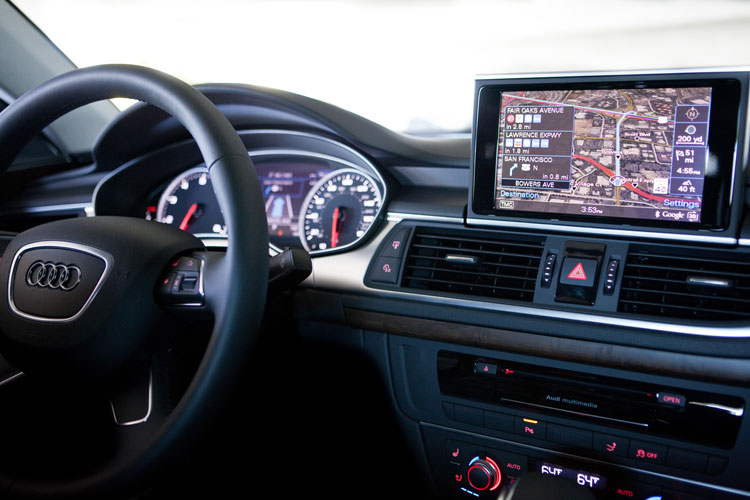
Google’s Android operating system is known for powering many smartphones, tablets and video game consoles. In the near future, Android will also be used to power infotainment systems in cars, starting with Audi. Google and Audi are expected to make a partnership announcement at the Consumer Electronics Show (CES) in Las Vegas next week, according to sources with The Wall Street Journal.
Audi vehicle drivers and passengers would be able to use the infotainment system to access music, navigation and apps that are currently available in Android smartphones. Google and Audi are working with several technology companies on the project, including Nvidia Corporation.
Who will Google compete against in the connected car market? By integrating Android into infotainment systems, Google is directly challenging Apple’s iOS in the Car service. Apple unveiled iOS in the Car at the Worldwide Developers Conference this past June. Apple’s iOS in the Car features include an Eyes-Free Siri mode, satellite navigation, music control, iMessage functionality and telephone commands. Apple has partnerships lined up with many major auto manufacturers for iOS in the Car, which means that Google need to act swiftly to remain competitive in the connected car market.
Audi is known for investing heavily in connected car initiatives. Last month, the auto company reported that 4G LTE connectivity will be offered in the 2015 A3 sedan and is seven times faster than their current 3G connectivity. Audi is also considering the creation of shared data plans between smartphones and their vehicles. Audi is working with both Google and Apple on infotainment projects.
source: forbes.com