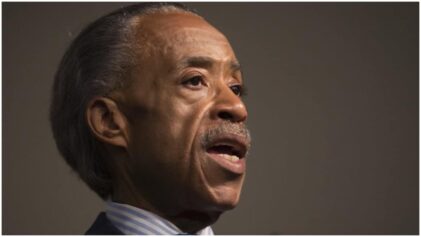
Nelson Mandela’s death has prompted an outpouring of effusive praise from the media and politicians across the political spectrum, but Rev. Al Sharpton pointed out yesterday on “Meet the Press” that the U.S. government has not always been a supporter of Mandela and his freedom-fighting African National Congress, particularly during the Reagan administration.
Sharpton said it was a “betrayal of history” to sugarcoat U.S. opposition to Mandela and sanctions against the apartheid regime.
“Let’s remember, the ANC, they were pursuing freedom,” Sharpton said. “Many of the communist nations embraced them, this country did not. It was not like they were born Marxist; they were born people seeking to be free. Some of the Marxist nations, either genuinely or in a self-interested way, tried to embrace that. This country did not and fought that and denounced them and denigrated them. And I think for us now to sugarcoat that is a betrayal of history. We chose sides. We chose the wrong side.”
Wall Street Journal columnist Paul Gigot tried to counter Sharpton, saying, “It wasn’t that the United States was taking the side of the South African government and apartheid. Everyone agreed that apartheid was odious. The disagreement was over how best to pursue the breakdown. After the sanctions debate, President Reagan picked an ambassador, Edward Perkins, to South Africa, who was a Black American, who argued for the release of Mandela, and may in fact have had significant influence in releasing him.”
But Sharpton wasn’t having this. “Let’s be clear, Reagan supported veto on bills; Reagan denounced Mandela, called him names. He evolved after a protest movement here turned the tone and public opinion. But let’s not act like Reagan was a major supporter of Mandela and the anti-apartheid movement. It’s just not true.”
Not only did Reagan and former British Prime Minister Margaret Thatcher refuse to impose sanctions on South Africa’s racist government, but they considered the ANC a terrorist organization. Former Vice President Dick Cheney, when he was a congressman joined 179 other House members to vote against a non-binding resolution to recognize the ANC and call on the South African government to release Mandela from prison. In 2000, Cheney still maintained that his vote had been correct.
In fact, Mandela’s name was on the U.S. terrorist watch list until it was removed in 2008, when President Bush signed a bill removing it.
Then-Secretary of State Condoleezza Rice called the restrictions “rather embarrassing.”
While calling Mandela a “great man,” last week Fox News talk show host Bill O’Reilly still participating in silly name-calling.
“He was a communist, this man. He was a communist, all right? But he was a great man! What he did for his people was stunning!… He was a great man! But he was a communist!”
O’Reilly’s guest, former senator and Republican presidential candidate Rick Santorum, then attempted to compare Obamacare to apartheid, which may get the prize as the most ridiculous statement about the new health care law ever uttered.
Santorum claimed Americans face an injustice similar to apartheid in the form of the “ever-increasing size of government that is taking over and controlling people’s lives, and Obamacare is at the front and center of that.”