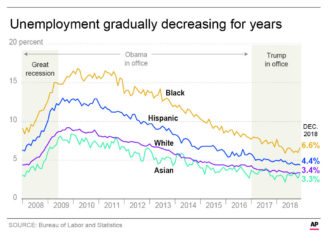
U.S. employers hired more workers than expected in November and the jobless rate hit a five-year low of 7.0 percent, raising chances the Federal Reserve could start ratcheting back its bond-buying stimulus as soon as this month.
Nonfarm payrolls increased by 203,000 new jobs last month, following a similarly robust rise in October, the Labor Department said on Friday. The report, which showed broad gains in employment and a rise in hourly earnings, suggested strength in the economy heading into year-end.
The unemployment rate dropped three tenths of a percentage point to its lowest level since November 2008 as some federal employees who were counted as jobless in October returned to work after a 16-day partial shutdown of the government.
The decline came even as the participation rate – the share of working-age Americans who either have a job or are looking for one – bounced back from October’s 35-1/2-year low.
Contributing to the report’s firm tone, the average length of the work week reached a three-month high and 8,000 more workers were hired in September and October than previously reported.
The drop in the unemployment rate brought it closer to the 6.5 percent level that policymakers said would trigger discussions over when to raise interest rates from their current levels near zero.
Job gains in November were broad-based, with 63.5 percent of industries increasing employment. Private-sector payrolls rose 196,000. But government employment also increased as hiring by state and local governments offset a drop in federal employment.
The report also showed average hourly earnings rose by four cents last month, while the length of the workweek edged up to an average of 34.5 hours from 34.4 hours – both bullish signs for the economy.
source: reuters.com