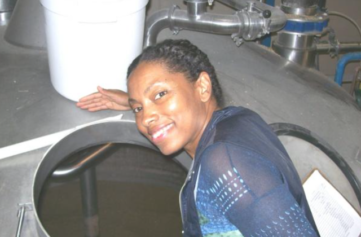
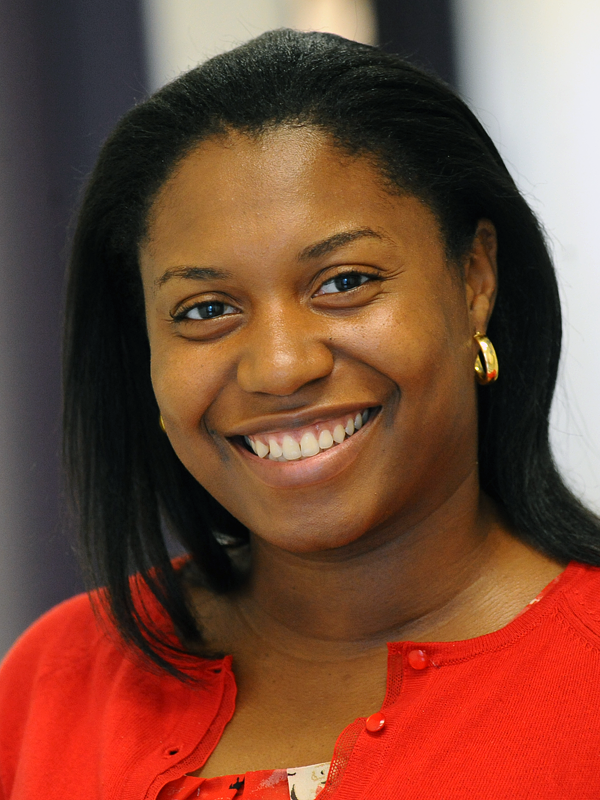
 Who: Christine Fleming, 30
MIT Technology Review named Christine Fleming on its prestigious annual list of 35 top young innovators. The electrical engineering assistant professor was honored in September as an outstanding inventor on the list for her work in the field of biotechnology and medicine.
According to Forbes:
“Fleming created optical imaging catheters to be able to get detailed images of the heart wall of a living animal. This could lead to new ways for doctors to get real-time images of the moving muscle in the heart wall, which should allow doctors to better diagnose diseases, particularly those in which the heart’s rhythms become irregular, and even to treat that disease less invasively, potentially by burning heart disease using radio frequency waves.”
Fleming joined Columbia University School of Engineering in 2012, after completing her doctoral work at Case Western Reserve University and post-doctoral work at Harvard Medical School. As a postdoctoral fellow at Harvard, Fleming developed signal and image-processing algorithms to identify cholesterol deposits within OCT images of coronary arteries.
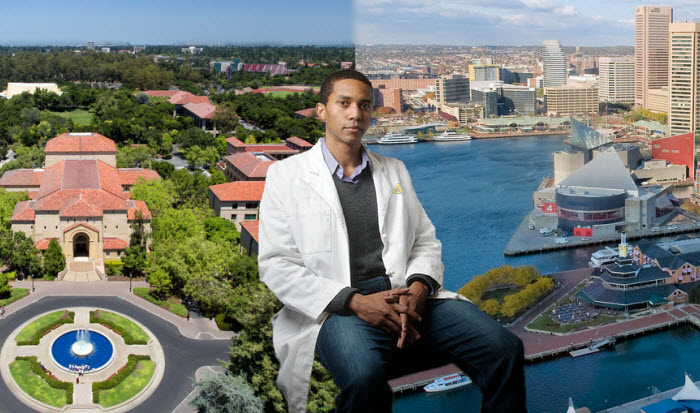
Who: Isaac Kinde, 30
Isaac Kinde will soon add M.D. to his name after he completes his tenure at The Johns Hopkins University School of Medicine. Kinde has accomplished impressive feats in research since his post-high school days. He’s developed significant improvements in technology used to detect several kinds of cancer. He’s submitted patent applications for his work, which has been published in prestigious academic journals such as Science Translational Medicine, Nature and PLOS ONE.
According to 60secondrecap.com:
“Kinde’s research involves improving the accuracy of DNA sequencing, a pioneering technique that identifies specific genes hiding in the vast landscape of the human genome. The technology he’s developed allows researchers to sort mutations in the bloodstream that are cancerous from other mutations that may not be so dangerous, and to do so earlier and with greater accuracy than ever.”
Kinde told the publication about finding his passion and “asking and answering the question nobody else knows.”