Kenyan President Uhuru Kenyatta told Somalia on Tuesday to “put their house in order,” a sign of his frustration at the festering instability in the neighboring country after members of a Somali militant group attacked and killed dozens at a Nairobi shopping mall.
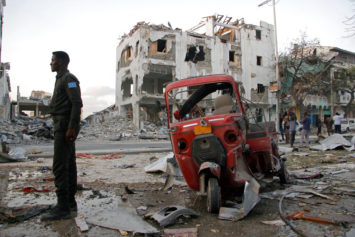
The al-Qaeda-linked al-Shabaab group said it raided the Westgate Mall, killing at least 67 people in a four-day siege, in revenge for Kenya’s military campaign against its fighters inside Somalia, according to a report from Reuters.
Al-Shabaab repeated its warnings to Kenya on Tuesday of new attacks if it did not pull troops from Somalia.
The mall attack bore out widespread fears that Somalia, whose cash-strapped government exerts little control beyond the capital Mogadishu, remains a training ground for militant Islamists and a launching pad for attacks beyond its borders.
Kenyatta said he would not be bullied into withdrawing his soldiers, who are part of an African peacekeeping force.
He also took aim at the Somali government, which a source close to the Kenyan presidency said had also recently called for Kenyan troops to leave before withdrawing the demand under pressure from regional leaders.
“If their desire is for Kenya to pull out of Somalia, my friends, all they need to do is what they should have done 20 years ago, which is put their house in order,” Kenyatta told religious leaders at a multi-faith prayer meeting, according to the report.
Mall attack to cost Kenya $200 million in tourism
USA Today reports that the risk to tourism was one of the first concerns officials expressed after the mall attack that left at least 67 dead, including 18 foreigners. Tourism generates 14 percent of Kenya’s GDP and employs 12 percent of its workforce, according to Moody’s and the World Travel and Tourism Council.
Moody’s predicts the attack will cost Kenya’s economy $200 to $250 million in lost tourism revenue, estimating it will slow growth of Kenya’s GDP by 0.5 percent. Kenya’s 2012 GDP was $41 billion.
“Evidence would seem to indicate that 2013 could well be a very difficult year for the local tourism industry,” according to a report released Tuesday by Business Monitor International, which revised its 2013 outlook for Kenya’s tourism growth from 3 percent down to 1.5 percent.
Tourism is Kenya’s largest earner of foreign exchange after tea and coffee exports, generating $4.7 billion in 2011, according to Moody’s and the World Travel and Tourism Council, the report said.