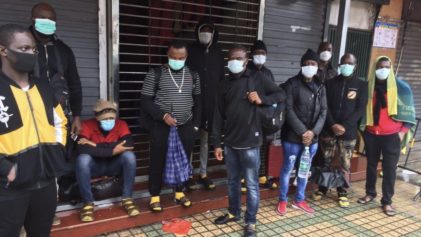
An estimated 250 Ugandans annually end up stranded abroad with human trafficking rings, a police report says.
Ugandan youths are trafficked to countries like China, India, Malaysia, Thailand, South Africa, France, Canada and Iraq, with many becoming victims of forced labor and sexual exploitation. Police say human trafficking is on the rise in Uganda due to poverty and lack of employment.
“According to statistics, every month, we get reports of over [20] Ugandans stranded seeking help. If the figure is multiplied in a year, it comes to over 250 Ugandans stranded abroad every year ,” Moses Binoga, the coordinator for Anti-Human Trafficking said in an interview on Friday.
He cautioned people who want jobs in foreign countries to avoid dealing with unregistered companies promising them juicy employment, since they are likely to be conned out of their property and money.
The ministry of Gender, Labor and Social Development has since released a list of registered and licensed companies allowed to take people abroad for jobs and another list of unregistered, suspicious companies.
“I kindly request people to inquire with me on telephone No. 0715 411-677 or Mr Turyasiima on 0770 496-059 from the ministry of Gender, Labor and Social Development, to know the licensed companies that have been authorized to take people abroad,” Binoga said.
Many local companies and some in the Middle East recruit Ugandans for domestic jobs in the Middle East.
“Ugandan housemaids in all the Middle East are treated very harshly. Their passports are confiscated by their sponsors, they don’t eat the same food with their employers, they are not given medical care, work 24 hours without rest and are denied any interaction with any person outside their homes,” Binoga said.
Even when Ugandan maids realize they are being exploited, they can’t quit because laws in the Middle East don’t protect them. Most Ugandans, Binoga says, spend between six to nine months in camps before their sponsors give them air tickets to return.
“However, the governments in the Middle East can also take a year or two without providing air tickets to people pending deportation because it’s not in their budget,” Binoga said.
Most illegal companies secure housemaid visas for people and deceive them that they could change to better jobs like teaching or engineering, hotel attendants and supermarket workers when they reach overseas.
“When they refuse to do the work in their visas, their sponsors refuse to buy them return air tickets,” he said.
Binoga said of prostitutes: “They don’t have licenses and they are employed by people with licenses who force them to sleep with a variety of clients involuntarily. The clients don’t pay the prostitutes directly, but pay their employers. Then the employers pay the prostitutes in-kind, like food and accommodation,” Binoga said..,
Read the rest of this article in The Observer