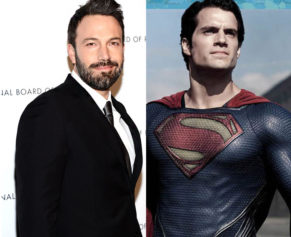
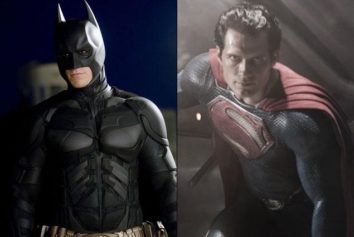
The new Superman movie leaves no doubt where the man of steel nurtured his super morals.
Clark Kent, played by Henry Cavill, wears a Royals T-shirt in one scene and watches a KU football game on TV in another. His dad, played by Kevin Costner, mentions Kansas State, and when we first meet the super schoolboy, his teacher is quizzing him on Sunflower State history: “Clark, I asked you, who first settled Kansas?”
In “Man of Steel,” opening today, Superman’s boyhood home is pegged as the fictional Smallville, Kansas.
It hasn’t always been so. In the 75 years of Superman appearances in comics, TV, movies and radio shows, Smallville has been all over the map: the outskirts of the fictional Metropolis (a stand-in for New York), on the Eastern Seaboard, in Iowa, Maryland, Pennsylvania, northern New Jersey …
New Jersey? Don’t be Snookied, says Dan DiDio, co-publisher of DC Comics.
“Smallville is always in Kansas,” DiDio says. “I always say it’s in the heart of Kansas. Wherever you find the biggest field, the biggest open ground, the best area for farming, that’s always where Smallville is, right in the center of that. That flag has been planted.”
If such a place existed, what region could lay claim to be the home of the world’s most recognizable superhero?
“I would put it in the middle of Kansas because it’s not near a big metropolitan area, and it’s in the wheat area, so I’d put it at a middle point, even at a northern point in Kansas,” says Jim Cavanaugh, owner of Clint’s Comics in Kansas City. “It’s always Midwestern … because his creators were originally from Cleveland, Ohio.”
There’s just one hitch…
Read More: kansascity.com