As the world braces for the possible demise of Nelson Mandela, South Africans are beginning to come to grips with the reality of life without the legendary 94-year-old leader.
Mandela remained in intensive care in a Pretoria hospital, where he has been treated for two days for a recurring lung infection. The office of South African President Jacob Zuma said Mandela was in “serious but stable condition” and was breathing on his own with his wife by his side.
With a front page headline that read “It’s time to let him go,” the South African Sunday Times carried a story quoting Mandela’s longtime friend Andrew Mlangeni, who said the time may have come for South Africans to say goodbye to their beloved leader.
“You have been coming to the hospital too many times. Quite clearly you are not well and there is a possibility you might not be well again,” Mlangeni told the paper. “Once the family releases him, the people of South Africa will follow. We will say thank you, God, you have given us this man, and we will release him too.”
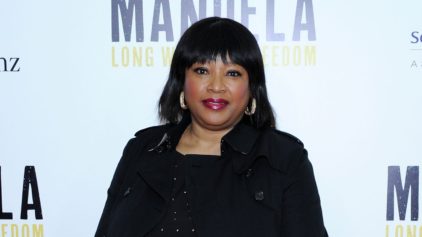
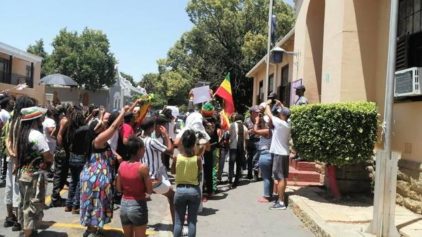
Meanwhile, Mandela’s daughter Zenani Dlamini, who is the South African ambassador to Argentina, has returned home to be with her father. On Sunday, as South Africans went to church to pray for their leader, well-wishes poured in from across the world for Mandela.
According to reports, Mandela’s house has so much medical equipment that it looks like an intensive care ward of a hospital. The leader, affectionately known to his people as “Madiba,” receives round-the-clock care. His lung problems began during his political prisoner days on Robben Island, and he has fought respiratory problems over the years.
“He has taught us … that we enhance our own humanity when we serve and make a difference to other people’s lives,” presidential spokesman Mac Maharaj said. “It’s easy to serve oneself, own interests, but serving the interests of others, making their lives better changes the quality of all humanity.”
Mandela has not appeared in public since South Africa hosted the World Cup in 2010. Last year the nation issued new banknotes with a picture of a smiling Mandela on the front.
He is a heroic figure who has taken on the role of the world’s conscience; a man that leaders across the globe seek out when they are desperate for guidance from a figure about as close as we get to a living saint.
Leaders like Mandela seem to happen only a few times in a century. Gandhi. Mother Teresa. Martin Luther King Jr. Dalai Lama. People whose courage, intellect, vision, esteem and moral conviction are so superior that they leave the rest of us in awe. These are people whose every utterance can move nations, spur armies to lay down arms, bring sworn enemies to the table.
Mandela was born to lead — his great-grandfather was king of the Thembu people; his father was chief of the town of Mveso before the family was exiled to Qunu. As a leader of the radical ANC fighting against the viciously racist system of apartheid, Mandela first tried to use the methods of nonviolent resistance that Gandhi had employed in South Africa and later in India.
When those tactics failed to move the Afrikaner government, Mandela and his colleagues resorted to acts of sabotage — bombing and burning property, but never harming individuals.
At his trial in 1964, he and his colleagues were charged with 193 acts of sabotage against the government.
Mandela’s certitude about his fight against apartheid was clear, as evidenced by this statement he made at his trial: “During my lifetime I have dedicated myself to the struggle of the African people. I have fought against white domination, and I have fought against black domination. I have cherished the ideal of a democratic and free society in which all persons live together in harmony and with equal opportunities. It is an ideal which I hope to live for and to achieve. But if needs be, it is an ideal for which I am prepared to die.”