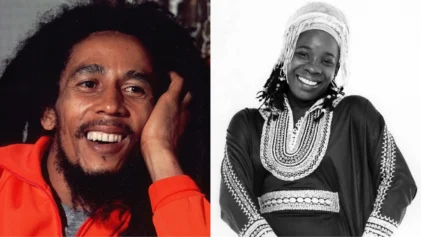
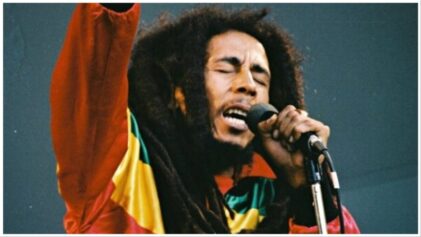
Remembering Bob Marley’s Jamaica Homecoming on His 68th Birthday

When Bob Marley arrived at the Norman Manley International Airport in late February 1978, it had been two years since he had left Jamaica. He had fled the country in December 1976, following an assassination attempt on his life.

The reggae star returned to Kingston for the “One Love Peace Concert,” scheduled for Saturday, April 22 at the National Stadium.  Two years earlier, he had been shot in the arm while rehearsing for the  “Smile Jamaica” show, another event meant to bring peace among Jamaica’s political factions.

Marley, who died in May 1981, would have turned 68 today. Two months from now will be the 25th anniversary of the “One Love Peace Concert,” where he briefly brought then bitter adversaries Prime Minister Michael Manley and Opposition Leader Edward Seaga together in a symbolic truce.
Manley was the charismatic socialist leader of the People’s National Party. Seaga headed the conservative Jamaica Labour Party, which opposed Manley’s radical policies and close ties with communist Cuba.
Tommy Cowan was head of Talent Corporation at the time and helped market Marley’s music in Jamaica. He met him at the airport and remembers a joyous homecoming.

“A lot of the brethren came out to see him. There was a motorcade and a lot of jubilation,” Cowan recalled.

Read more: JamaicaObserver
Still independent.

We hope this story was worth your time. For over 14 years, Atlanta Black Star has stayed Black-owned and independently run. We didn't get here by waiting on ad budgets that were never built to prioritize us. Our readers did that.

Corporate support for Black media has always been thin. Outlets like ours get roughly 1% of the $170 billion spent on U.S. advertising each year, and that margin is shrinking further as advertisers walk back the DEI-linked commitments they made in 2020. That's the backdrop. It's not why we're asking.

The wider picture isn't any steadier. Newspaper ad revenue has fallen more than 80% since 2005, and local newsrooms are closing at a rate of roughly two a week nationwide. When outlets go under, it's rarely the ones built to center a Black perspective from the ground up that get to stick around.

We know a request for support isn't why you came here. But without readers choosing to fund this work directly, the depth of reporting we can do at home and abroad shrinks along with everyone else's. If you're not in a position to give, that doesn't change how much we value you as a reader.

If you are able to, a recurring contribution does more for us than a single one-time gift, because it lets us plan the next investigation instead of just the next invoice. It takes about 30 seconds, no long form, no account. Thank you for continuing to support independent journalism and freedom of the press.

Back to top