Cast of ‘Middle of Nowhere’ Reached Beyond Stereotypes

When the black actors in “Middle of Nowhere” read the film’s script, they were shocked to find they could actually relate to the characters.

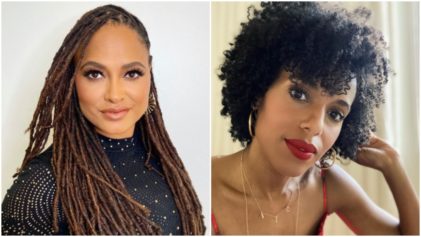
Director Ava DuVernay’s depiction of a Compton woman struggling while her husband is incarcerated resonated with her cast of actors.

Before joining the cast, actor David Oyelowo had been shooting “Lincoln,” in which he plays Union Army soldier Ira Clark. He said “Middle of Nowhere” delves deeper into black people’s lives in a way that emphasizes normality.

He hinted that, while he was grateful to see black characters depicted in the Civil War-set Steven Spielberg film, the characters seemed to be an afterthought compared to the movie’s light-skinned titans, particularly when compared to “Middle of Nowhere.”

“You don’t see the people suffering under the weight of not having the 13th Amendment — there’s only so much you can do in two hours — and that’s the movie,” he said. “In ‘Lincoln,’ the roles you see: A butler, you see [Mary Lincoln actress] Sally Field’s handmaiden, so to speak, and you see me, myself, a soldier fighting for his country.”

“Middle of Nowhere” stars Emayatzy Corinealdi (above), a relative unknown in Hollywood, as Ruby. When her husband is jailed for gun smuggling, Ruby is forced to drop out of medical school to pay his legal fees. After he is denied parole, she finds herself on an existential journey trying to piece together a life for herself while maintaining her relationship with her incarcerated husband.

Read more: The Wrap
 

Still independent.

We hope this story was worth your time. For over 14 years, Atlanta Black Star has stayed Black-owned and independently run. We didn't get here by waiting on ad budgets that were never built to prioritize us. Our readers did that.

Corporate support for Black media has always been thin. Outlets like ours get roughly 1% of the $170 billion spent on U.S. advertising each year, and that margin is shrinking further as advertisers walk back the DEI-linked commitments they made in 2020. That's the backdrop. It's not why we're asking.

The wider picture isn't any steadier. Newspaper ad revenue has fallen more than 80% since 2005, and local newsrooms are closing at a rate of roughly two a week nationwide. When outlets go under, it's rarely the ones built to center a Black perspective from the ground up that get to stick around.

We know a request for support isn't why you came here. But without readers choosing to fund this work directly, the depth of reporting we can do at home and abroad shrinks along with everyone else's. If you're not in a position to give, that doesn't change how much we value you as a reader.

If you are able to, a recurring contribution does more for us than a single one-time gift, because it lets us plan the next investigation instead of just the next invoice. It takes about 30 seconds, no long form, no account. Thank you for continuing to support independent journalism and freedom of the press.

Back to top