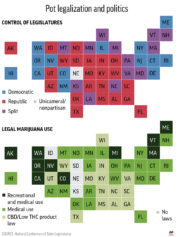
Last week in Washington state, Initiative 502 passed with a 55 percent majority, legalizing marijuana for recreational use. Starting December 6, citizens over the age of 21 can possess up to an ounce of marijuana for personal use. State authorities will now have to incorporate the legalization measures into their current methods of law enforcement, and educate citizens on legal use.
Jonah Spangenthal-Lee of the Seattle Police Department has written a basic guide for city residents curious about how the new law handles marijuana use. The posting, titled “Marijwhatnow? A Guide to Legal Marijuana Use in Seattle,” offers a police perspective on marijuana enforcement under the initiative and has received over 200,000 page views already due to its humorous approach to the SPD’s new policy towards commonly asked questions about the initiative.
“SPD seized a bunch of my marijuana before I-502 passed. Can I have it back? No.” The guide says to prior offenders.
The substance’s status has created several gray areas within the law. For example, though possession of an ounce or less is legal, growth, sale or distribution of non-medicinal marijuana still violates state law. Smokers may be ticketed for marijuana use in public areas, and drivers can be charged for driving under the influence after use.
Spangenthal-Lee also offers a warning for those eager to exercise their new right to mary jane. “Hold your breath. Your case will be processed under current state law,” the guide reads. “However, there is already a city ordinance making marijuana enforcement the lowest law enforcement priority.”
Currently, regular citizens cannot legally purchase pot for recreational use, but the Washington State Liquor Control Board has set a December 1, 2013 deadline to create guidelines for sale and distribution. Marijuana remains illegal under federal law, meaning federal prosecutors can choose to charge those involved in the drug’s use. However, they will have to do so without the help of local police, as the guide states, “officers and detectives will not participate in an investigation of anything that’s not prohibited by state law.”