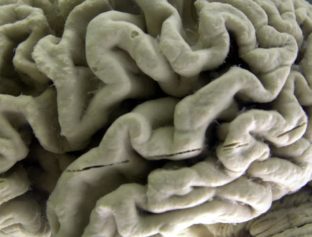
Exercising in your 70s may stop your brain from shrinking and showing the signs of ageing linked to dementia, say experts from Edinburgh University.
Brain scans of 638 people past the age of retirement showed those who were most physically active had less brain shrinkage over a three-year period.
Exercise did not have to be strenuous – going for a walk several times a week sufficed, the journal Neurology says.
But giving the mind a workout by doing a tricky crossword had little impact.
The study found no real brain-size benefit from mentally challenging activities, such as reading a book, or other pastimes such as socialising with friends and family.
When the researchers examined the brain’s white matter – the wiring that transmits messages round the brain – they found that the people over the age of 70 who were more physically active had fewer damaged areas than those who did little exercise.
And they had more grey matter – the parts of the brain where the messages originate.
Experts already know that our brains tend to shrink as we age and that this shrinkage is linked to poorer memory and thinking.
And previous studies have shown that exercise helps reduce the risk of dementia and can slow down its onset.
But scientists are still baffled about why this is.
‘Never too late’
Exercise increases blood flow to the brain, delivering oxygen and nutrients to brain cells, which may be important.
Or it may be that as people’s brains shrink, they become less inclined to exercise.
Regardless of why, experts say the findings are good news because exercise is an easy thing to do to boost health.
Dr Simon Ridley, head of research at Alzheimer’s Research UK, said: “This study links physical exercise to fewer signs of ageing in the brain, suggesting that it may be a way of protecting our cognitive health.
Source: